

Parent Categories


Related Products



Related Books

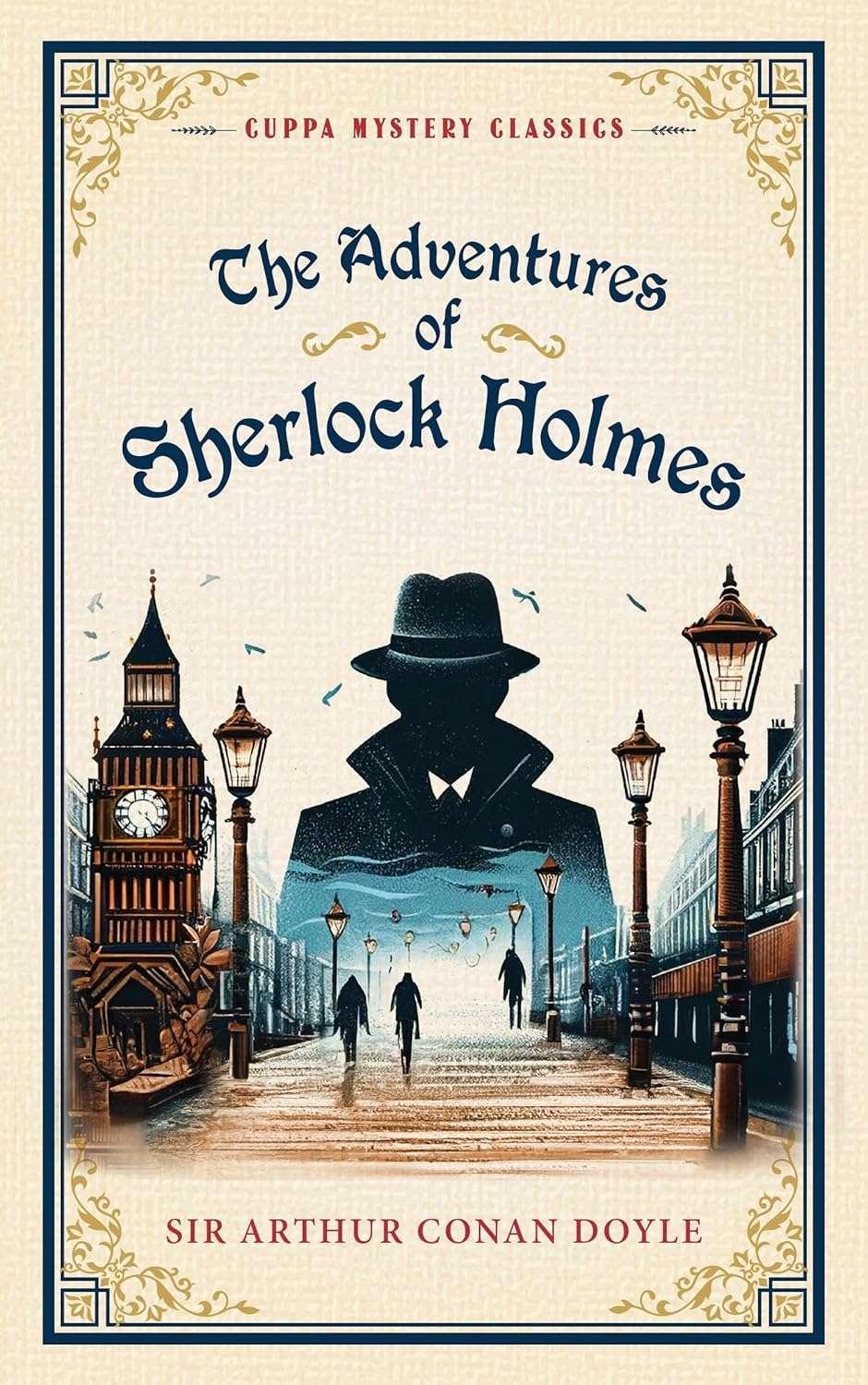
Why Are We Still Reading Lord of the Flies? William Golding and the Darkness Within Human Nature
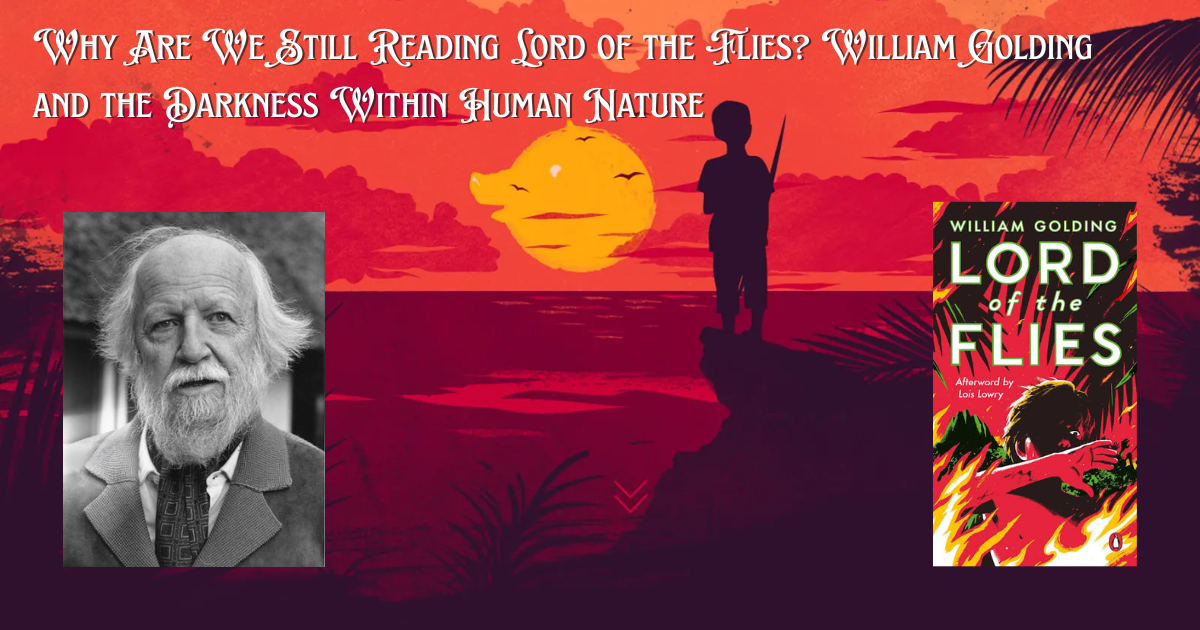 Lord of the Flies
What happens when the rules disappear?
No teachers. No parents. No police. No laws. No adults to tell us what is right and wrong. Just a group of children, an island, and the freedom to decide what happens next.
When William Golding published Lord of the Flies in 1954, he turned this deceptively simple premise into one of the most unsettling novels of the twentieth century. More than seven decades later, the book remains a fixture in classrooms, book clubs and reading lists. Its setting may be an unnamed tropical island, but its questions have never stayed there. What holds society together? Are human beings naturally cooperative, or does civilisation merely keep something darker under control? And what happens when fear becomes more powerful than reason?
Golding does not offer comfortable answers.
Also read: One Stormy Night, One Ghost Story Contest: How Mary Shelley's Frankenstein Was Born
The Island Without Adults
 [Image Credit: The Guardian]
The novel begins almost like an adventure story. A group of British schoolboys survive a plane crash and find themselves stranded on an uninhabited island. Ralph, one of the older boys, quickly emerges as a leader. Alongside Piggy, whose intelligence and practicality make him an important voice, he tries to organise the group.
There is a conch shell, discovered early in the novel, which becomes a symbol of order. Whoever holds it has the right to speak. The boys create rules, establish meetings and attempt to keep a signal fire burning so that passing ships might rescue them.
For a while, civilisation seems remarkably easy to reproduce.
Then Jack enters the picture.
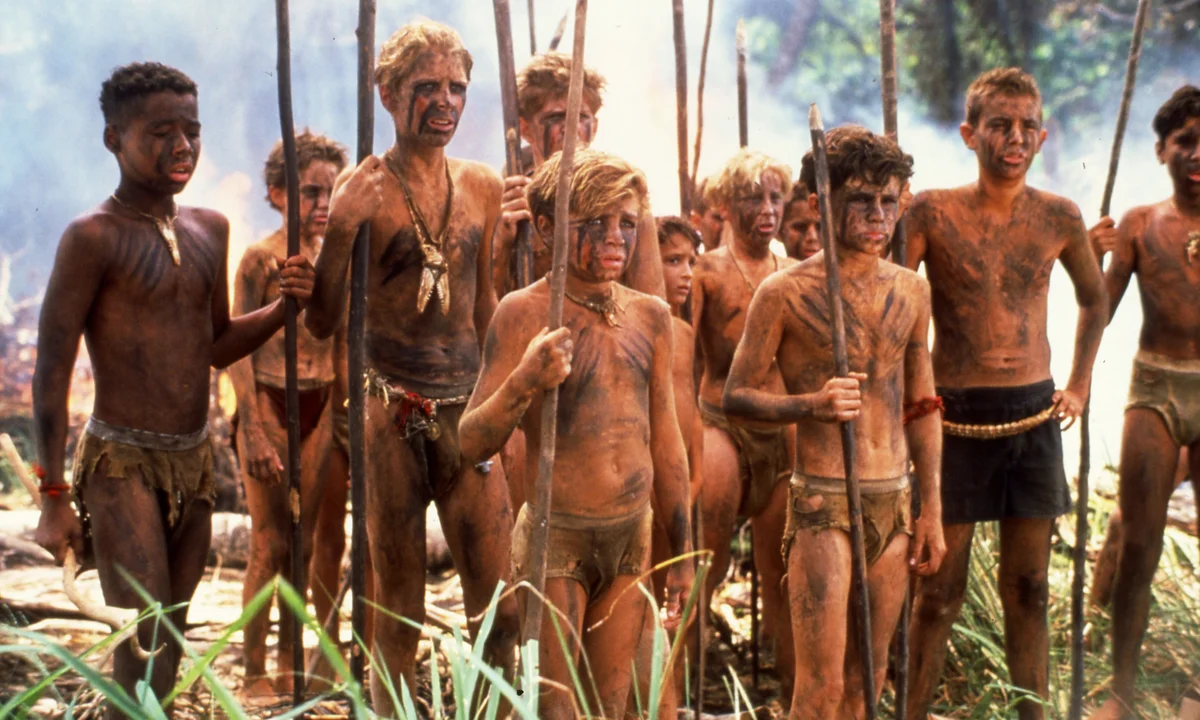
Leader of the choirboys, Jack is initially given responsibility for hunting. The task awakens something in him. His face becomes painted, his behaviour increasingly savage, and hunting shifts from a means of survival to a source of power and excitement.
The island gradually stops being a playground and becomes a testing ground for human behaviour.
What Is the Real Beast?
 [Image Credit: BBC]
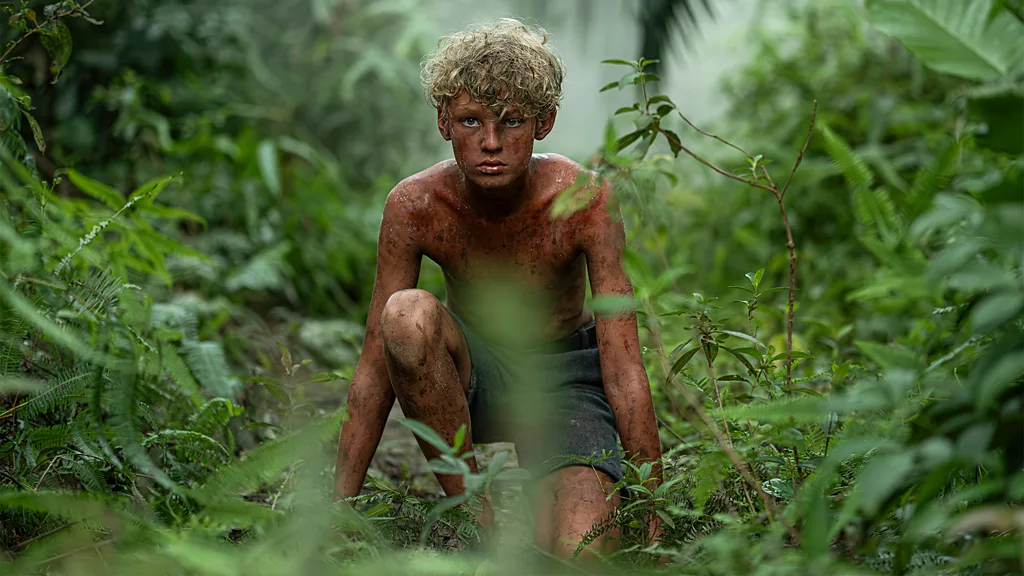
One of the most memorable ideas in Lord of the Flies is also one of its most disturbing: the boys are terrified of a mysterious “beast”. They imagine that something dangerous is hiding on the island.
But Golding steadily turns the question around.
Perhaps the frightening thing they are searching for is not outside them at all.
The “beast” becomes a symbol of the fear, violence and instinctive cruelty within the boys themselves. Simon, one of the novel's more thoughtful characters, eventually understands this. His insight is central to Golding's argument: evil does not necessarily arrive from somewhere else. It can emerge from ordinary people when restraints disappear.
That idea is what gives the novel its enduring power.
Ralph vs Jack: Order Against Instinct
The conflict between Ralph and Jack is often read as a simple battle between civilisation and savagery. Ralph believes in assemblies, rescue and rules. Jack increasingly values hunting, strength and authority.
But Golding makes the transformation more complicated than a straightforward good-versus-evil story.
The boys are not born as neatly divided heroes and villains. They are frightened, impressionable and vulnerable to group pressure. Even those who initially support Ralph can be drawn toward Jack's tribe.
Jack understands something Ralph struggles to recognise: fear can unite people quickly.
His promise of protection becomes increasingly attractive as the boys become convinced that the beast is real. The hunting chants and painted faces create a sense of belonging. Individual responsibility begins to disappear inside the group.
This is one of Golding's sharpest observations about human behaviour. People do not always surrender freedom because they hate rules. Sometimes they surrender it because someone promises them safety.
The Darkness Behind the Mask
Golding wrote Lord of the Flies in the aftermath of the Second World War, at a time when the world had witnessed industrialised violence on an extraordinary scale. The novel emerged partly as a response to the idealised idea that children are naturally innocent and that civilisation is simply a thin layer placed over fundamentally rational human beings.
Golding had served in the Royal Navy during the war, and his experiences profoundly shaped his view of human nature. He had seen enough to distrust the assumption that brutality belonged only to obviously evil people.
That context matters when reading the novel.
The island is not merely an imaginary survival scenario. It is a miniature society. The boys bring language, hierarchy, beliefs and social habits with them. But they also bring jealousy, fear, ambition and the desire for power.
The island does not create their darkness.
It reveals it.
Why Does Lord of the Flies Still Matter?
Perhaps the reason we continue to read Lord of the Flies is that the island keeps changing.
Every generation finds a different way into the novel. One reader may see a story about leadership. Another may see a warning about mob mentality. Someone else may focus on fear, masculinity, political authority or the fragility of institutions.
And the questions remain remarkably contemporary.
How quickly can misinformation spread when people are frightened? Why do groups sometimes turn against outsiders? Why can charismatic leaders gain influence by identifying an enemy? How easily can individuals behave differently when they become part of a crowd?
Golding was not writing a political textbook or a psychological experiment. Lord of the Flies should not be treated as scientific proof that humans are inherently violent. It is, above all, a work of fiction—a dark thought experiment about what might happen when social restraints weaken.
Its power lies precisely in that uncertainty.
The Novel We Cannot Quite Escape
There is something particularly unsettling about the fact that Golding chose children for his experiment. We expect childhood to represent innocence, imagination and possibility. On Golding's island, those qualities exist alongside cruelty.
The horror of the novel therefore does not come simply from what happens to the boys. It comes from recognising how recognisable their emotions are: the need to belong, the fear of exclusion, the thrill of power, the comfort of following a crowd and the temptation to blame someone else.
That may be why Lord of the Flies refuses to become merely an old school novel.
Its island is fictional, but its central question follows us everywhere: when the structures that keep us civilised begin to disappear, what exactly is holding us together?
Golding never gives us an easy answer. And perhaps that is why, decades after the novel first appeared, we are still turning its pages.
Your next read: Goethe’s “World Literature”: Why a 200-Year-Old Idea Still Shapes the Way We Read