

Parent Categories


Related Products


Related Books
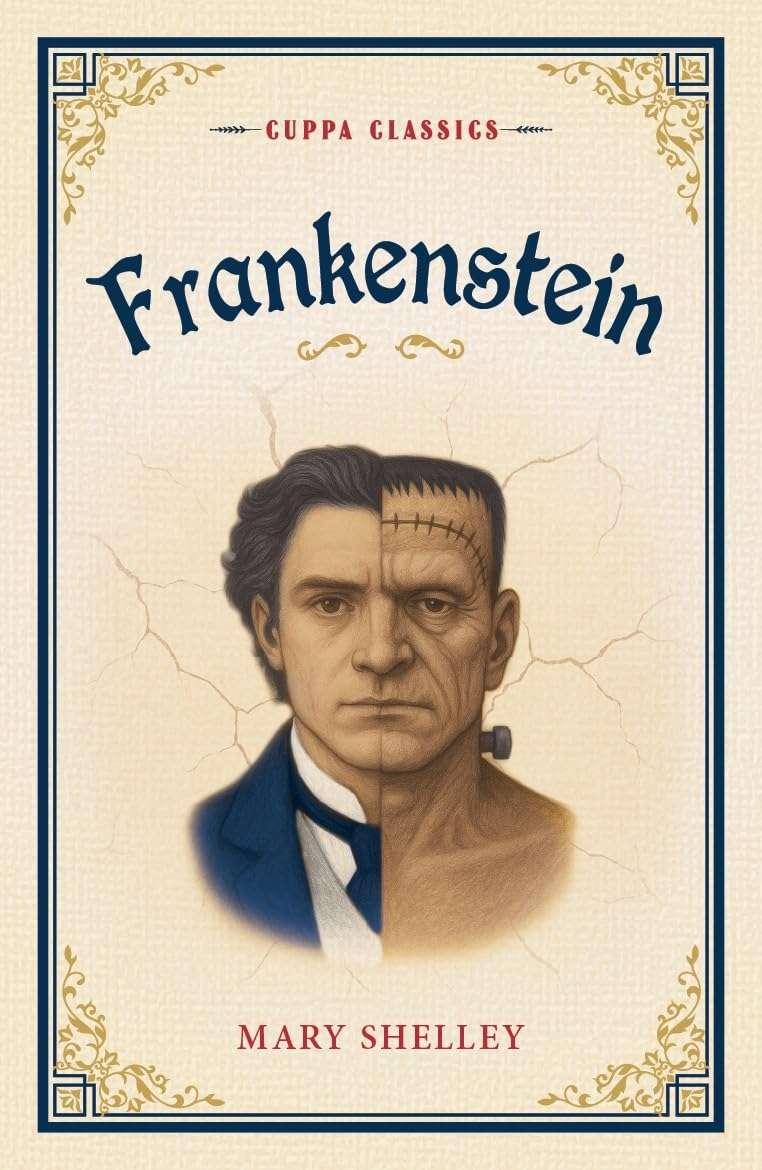
One Stormy Night, One Ghost Story Contest: How Mary Shelley's Frankenstein Was Born
 Mary Shelley's Frankenstein
Imagine you are with your friends, and you’ve planned to hang out together and enjoy the summer. But life has other plans. The weather suddenly takes a turn for the worse, and now you have to spend the stormy night together.
If this were a modern-day scenario, you’d probably have your phones in your hands, music playing in the background, and endless things to talk about. You could complain about how hectic life has been, scroll through social media, or put on a movie. With the internet at your fingertips, entertainment would be almost effortless. Writing and creating something together probably wouldn’t be the first thing on anyone’s mind.
But centuries ago, four writers found themselves in almost exactly this situation. One of them was a teenage Mary Shelley. There were no phones to scroll through, no streaming services to turn to, and no internet to rescue them from boredom. Instead, they had books, conversations, imagination—and a particularly miserable summer of 1816, the Year Without Summer.

And what came out of those stormy days was the first-ever science fiction work that the world ever saw: Frankenstein; or, The Modern Prometheus. So, let’s rewind to the summer of 1816 and see what happened before Frankenstein was conceived as an idea.
Also read: Bram Stoker’s Dracula: The Timeless Tale That Redefined Gothic Horror
Four Writers, One Very Strange Summer
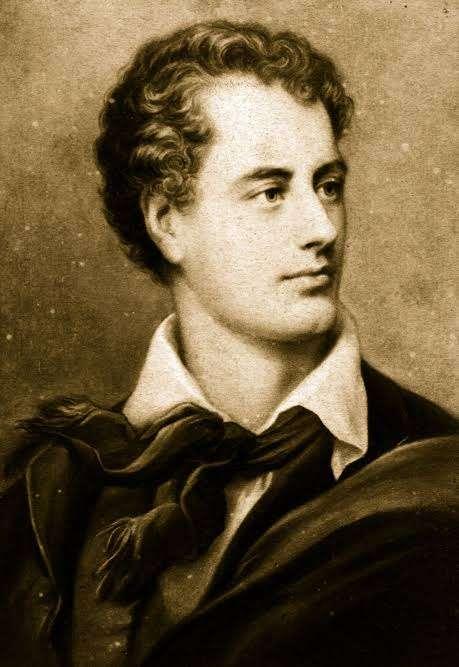 [Lord Byron]
To understand how Frankenstein came to life, we first need to meet the people who found themselves together in Switzerland that strange summer of 1816. At the centre of it all was Lord Byron, the famous English poet, who had left Britain amid scandal and controversy. He was living near Lake Geneva, where he rented a grand villa known as Villa Diodati.
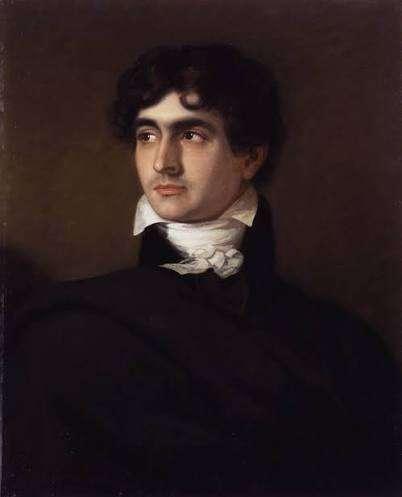 [John Polidori]
Byron was joined by his personal physician and friend, John Polidori. Polidori was fascinated by the darker side of storytelling. Percy Bysshe Shelley, one of the leading Romantic poets of the time, and Mary Godwin (later Mary Shelley) joined them at Lake Geneva for something more than romance and adventure. They wanted to spend time with Byron and immerse themselves in the spectacular landscape that had inspired so many writers and artists.
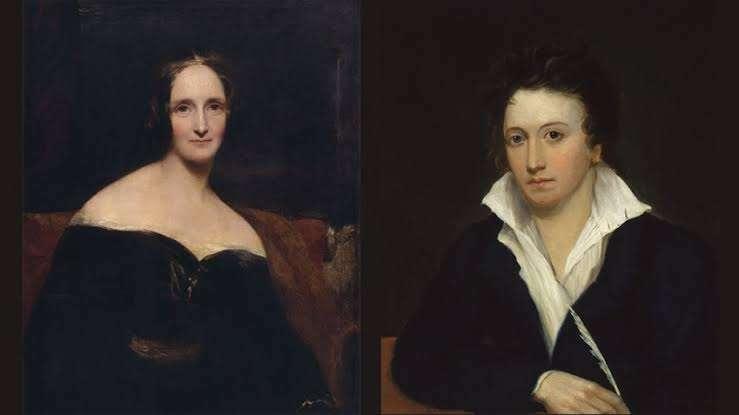 [Mary Shelley and Percy Shelley]
Instead, they arrived during one of the strangest summers Europe had ever experienced. The four were young, creative, ambitious, and fascinated by literature. They had poetry, books, ideas, and plenty of time on their hands. What they did not have was the summer they had expected.
Instead of warm days spent outdoors by the lake, they were met with relentless rain, cold temperatures, dark skies, and violent storms. And with the weather keeping them indoors, their conversations began to turn toward darker subjects. It was only a matter of time before someone suggested a challenge that would change literary history.
A Ghost Story Contest Begins
With the rain refusing to stop and the skies growing darker by the day, the group at Villa Diodati had to find ways to entertain themselves indoors. Then Lord Byron proposed an idea: Why not write a ghost story of their own?
It was a simple challenge, almost like a game to pass the time. Each person would come up with a terrifying tale and see who could create the most frightening story. For Byron, Percy Shelley, Mary Godwin, and John Polidori, it was the perfect activity for a stormy summer. They were all writers or deeply interested in literature, and the gloomy atmosphere outside seemed almost designed for the occasion.
Mary Shelley’s Nightmare
At first, Mary struggled. While the others were coming up with their stories, she couldn't seem to find an idea that felt worthy of the challenge. She was trying to think of a story that would genuinely frighten her readers, but nothing came to her.
Then came a night that would change everything. In her later introduction to Frankenstein, Mary described the moment when the idea came to her. After going to bed, she began to imagine a scene: a scientist had created a human being and was attempting to bring it to life.
But this was not the beautiful moment of scientific triumph one might expect. Instead, Mary imagined the creator horrified by what he had brought into existence. She described seeing a “pale student of the unhallowed arts” kneeling beside the thing he had assembled. The creature appeared lifeless—until it suddenly began to move. The scientist was horrified. He had succeeded in creating life, but the result was not what he had imagined. What should have been an achievement had become a nightmare.
Mary woke from the vision terrified. And then came the realisation. She had found her ghost story. The idea was no longer simply about a monster. It was about creation, ambition, responsibility, rejection, and loneliness.
Nine Months Later
 [Image Credit: Editions des Saints Pères]
Over the following months, Mary continued working on the manuscript. The story grew beyond the original supernatural premise, introducing Victor Frankenstein, the ambitious young scientist whose obsession with discovering the secret of life leads him to create a being he immediately abandons. But the creature was not simply a mindless monster. Mary gave him thoughts, emotions, desires, and—most importantly—a deep need for companionship and acceptance.
By the time Mary and Percy Shelley left Switzerland, the story was still unfinished. The summer of 1816 had given her the idea, but turning that idea into a novel would take considerably more time. Mary continued writing and revising the manuscript after returning to England. She finished the manuscript by 1817. In 1818, Frankenstein was published anonymously.
One Stormy Summer That Changed Literature
The teenager who had struggled to think of a ghost story had unknowingly created something that would become one of the most enduring works of Gothic literature—and one of the earliest novels associated with modern science fiction.
The story has been adapted countless times for theatre, film, television, and popular culture. Frankenstein's creature has become one of the most recognisable figures in the world. More importantly, the novel feels surprisingly relevant in an age of genetic engineering, artificial intelligence, biotechnology, and rapidly advancing science.
Perhaps that is what makes the story of Frankenstein so fascinating. The novel was born from a moment when technology barely resembled what we know today. Mary Shelley lived in a world of candlelight, manuscripts, and horse-drawn carriages. Yet she imagined a question that humanity continues to wrestle with: just because we can create something, does that mean we should? She leaves you with that question after you read it.
And today, on Mary Shelley’s birthday, we celebrate not just the woman who gave us Frankenstein, but the power of writing and imagination itself. Because sometimes, all it takes is a storm, a blank page, and one impossible idea to create something that lasts forever.
Your next read: Frankenstein’s Legacy: From Gothic Horror to Pop Culture Phenomenon