

Parent Categories



Related Products


Related Books

The Two Stories in Life of Pi—and Why They Matter
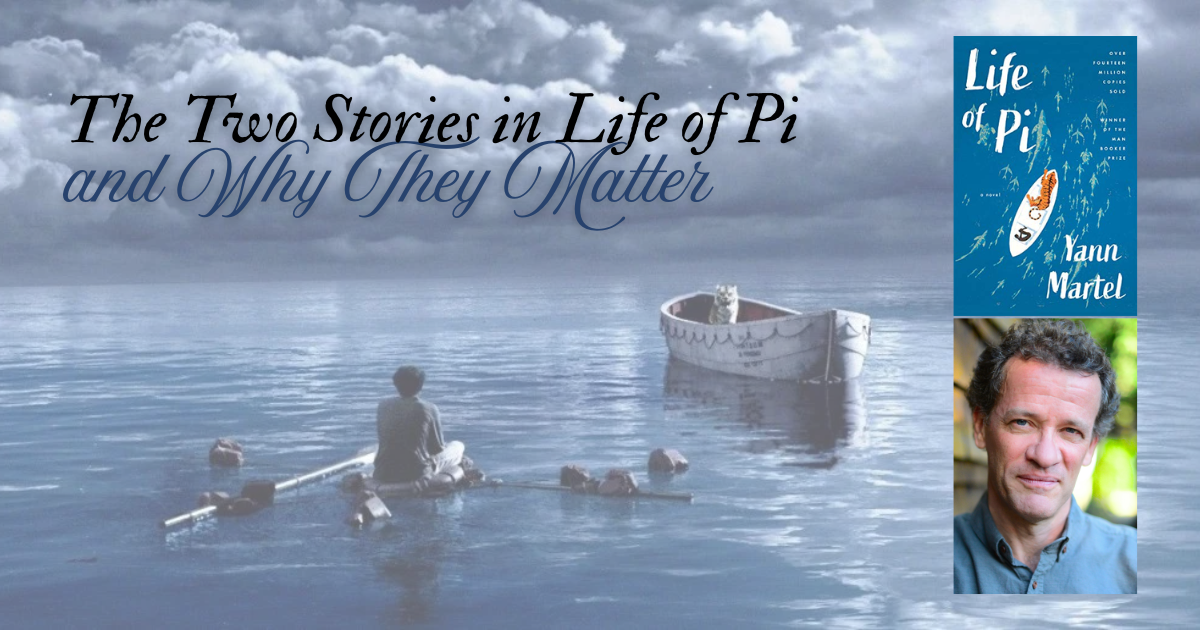 Life of Pi
Some novels entertain. Some provoke thought. And then there are the rare books that quietly ask readers to examine the way they see the world. Life of Pi by Yann Martel belongs firmly in that last category.
At first glance, it seems like an extraordinary survival story. A 16-year-old boy named Pi Patel survives a shipwreck in the Pacific Ocean and finds himself stranded on a lifeboat with a Bengal tiger named Richard Parker. What follows is an unforgettable journey of fear, endurance, faith, and companionship in the face of impossible odds.
Yet anyone who reaches the novel’s final pages discovers that the real story is not about survival at sea. It is about storytelling itself.
The book’s most powerful moment arrives when Pi offers two versions of what happened after the ship sank. Readers are left with a choice: which story do they believe? More importantly, why do they believe it?
That question is what makes Life of Pi such a remarkable and enduring novel.
Also read: 8 Poems by WB Yeats That Capture Love, Loss & Longing
The Story We Want to Believe
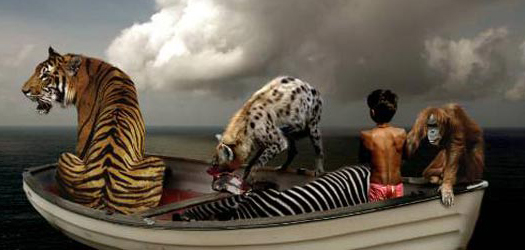 [Image Credit: www.whyihateeverything.com]
For most of the novel, readers are immersed in Pi’s incredible account of survival. After the Japanese cargo ship carrying his family and their zoo animals sinks, Pi finds himself on a lifeboat with several animals: a wounded zebra, a hyena, an orangutan, and Richard Parker, a massive Bengal tiger.
The animals soon become locked in a brutal struggle for survival. The hyena kills the zebra and the orangutan before being killed by Richard Parker. Pi is left alone with the tiger for 227 days as they drift across the Pacific Ocean.
The story is filled with astonishing details. Pi develops ingenious methods to coexist with Richard Parker. He catches fish, collects rainwater, and establishes boundaries on the lifeboat. There are moments of terror, wonder, and even beauty. Readers encounter storms, starvation, blindness, and the mysterious floating island inhabited by meerkats.
It is a story that feels almost mythic.
Throughout the novel, Pi’s deep spirituality shapes the narrative. A practitioner of Hinduism, Christianity, and Islam, he views the world through a lens that allows room for mystery and transcendence. As a result, the story often feels larger than reality itself. It becomes a tale not just of survival, but of faith.
By the time readers reach the final chapters, many have fully accepted this version of events. Richard Parker feels real. The ocean feels real. The journey feels real.
And then Pi tells another story.
The Story Without Animals
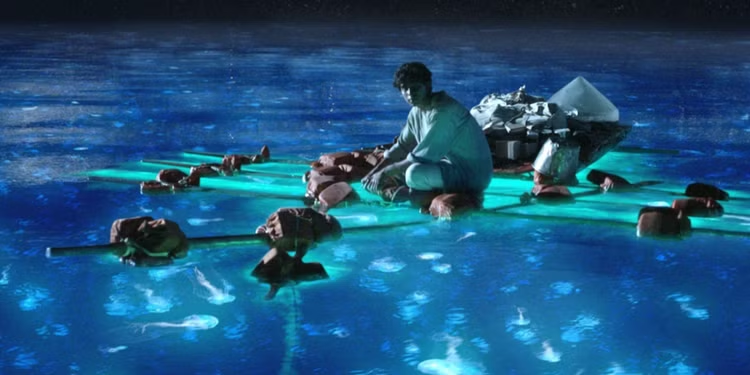 [Image credit: www.screenrant.com]
When investigators attempt to understand the sinking of the ship, they struggle to believe Pi’s account. In response, he offers a second version.
In this story, there are no animals.
Instead, the zebra becomes a wounded sailor. The orangutan becomes Pi’s mother. The hyena becomes a violent ship’s cook. Richard Parker becomes Pi himself.
The events remain broadly similar, but the symbolism changes everything.
The cook murders the sailor and later kills Pi’s mother. Pi, driven by grief and rage, kills the cook in return. The horrifying acts that seemed easier to process when carried out by animals are revealed as possible human actions.
Suddenly, the fantastical adventure transforms into something much darker.
The second story strips away wonder and replaces it with brutality. It presents survival not as an epic struggle alongside a tiger, but as a traumatic experience that may have forced a young boy to confront the worst aspects of human nature—including his own.
The emotional impact is profound because readers realise that both stories may be describing the same events.
One is literal.
The other may be symbolic.
Neither can be conclusively proven.
Why the Two Stories Matter
The brilliance of Life of Pi lies in the fact that it never forces readers to choose a definitive truth.
Instead, it asks why stories matter in the first place.
The animal story is richer, more imaginative, and more meaningful. It offers readers hope amid suffering. It transforms horror into something that can be understood and endured. The human story, while perhaps more realistic, is bleak and emotionally devastating.
At the end of the novel, Pi asks the investigators which story they prefer.
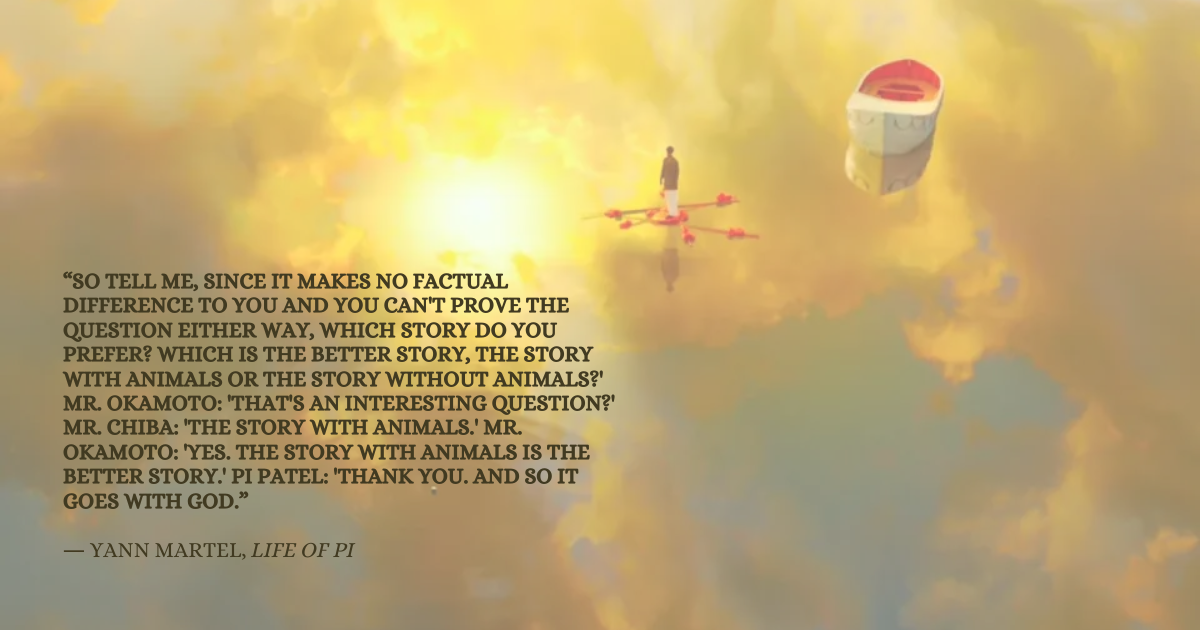
They choose the story with the animals.
Most readers do too.
This choice reveals something important about human nature. Facts alone do not always shape our understanding of the world. Meaning does. We are drawn to stories that help us make sense of pain, loss, and uncertainty.
Pi’s animal tale may not simply be an escape from reality. It may be a way of surviving reality.
In that sense, storytelling becomes an act of resilience.
Faith, Truth, and Imagination
The novel’s central question extends beyond survival. It also touches on faith.
Throughout the book, Pi embraces multiple religions, often frustrating those who insist that only one path can be true. He is less interested in rigid certainty than in the power of belief.
The ending mirrors this idea.
Just as faith involves choosing a story that gives life meaning, readers must decide how they interpret Pi’s experience. The novel never proves which account is true because that uncertainty is the point.
Martel invites readers to consider whether truth is always found in literal accuracy. Sometimes a story can convey emotional or spiritual truth even when its factual details are impossible to verify.
The tiger may or may not have existed.
But what Richard Parker represents—the instinct to survive, the darkness within humanity, and the will to keep living—is undeniably real.
A Story That Stays With You
More than two decades after its publication, Life of Pi continues to captivate readers because it refuses to offer easy answers. Its ending lingers long after the final page, prompting discussions about truth, memory, faith, and the stories people tell themselves in order to endure hardship.
The novel’s genius lies not in revealing which story is correct, but in making readers confront why they prefer one over the other.
In the end, Life of Pi is not merely about a boy and a tiger adrift at sea. It is about the human need to find meaning in chaos. Faced with two versions of reality, we instinctively gravitate toward the one that helps us understand the world—and ourselves—a little better.
And perhaps that is why Pi’s question remains so powerful:
Which story do you choose?
And what does that choice say about you?
Your next read: No Exit and the Meaning Behind Jean-Paul Sartre's “Hell Is Other People”