

Parent Categories


Related Products


Related Books

Goethe’s “World Literature”: Why a 200-Year-Old Idea Still Shapes the Way We Read
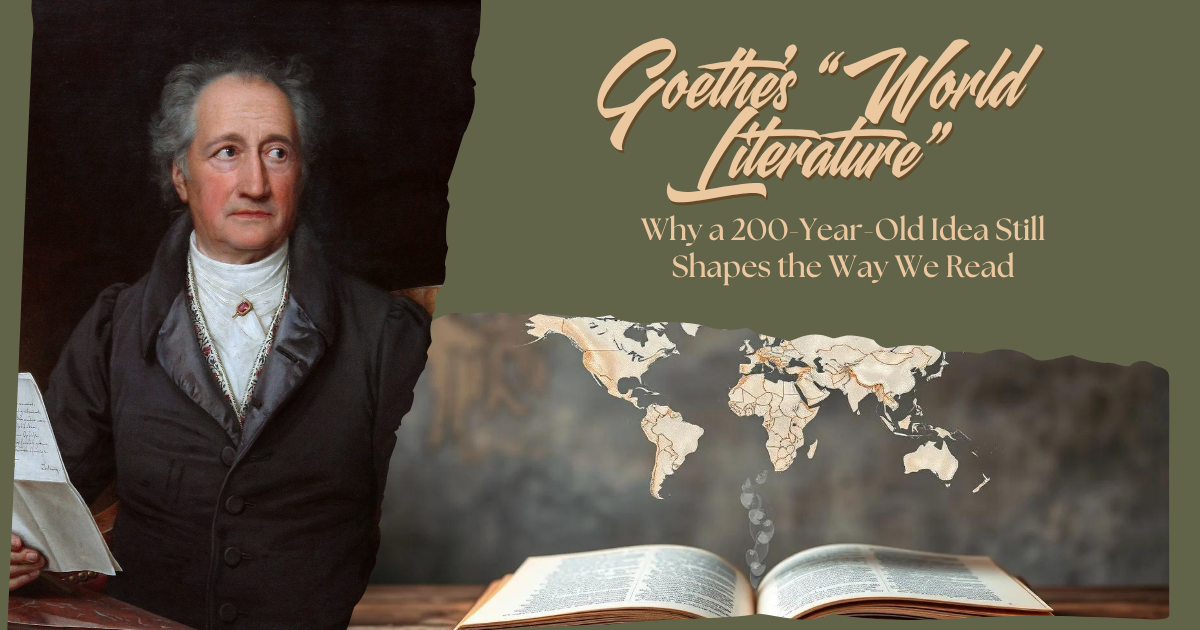 Goethe
In the early nineteenth century, when most readers still thought of literature largely in national terms, Johann Wolfgang von Goethe had a remarkably different idea. Literature, he suggested, did not belong neatly inside borders. A poem written in Persia could speak to a reader in Germany; a Chinese novel could offer something meaningful to a European audience; a foreign play could change the way a writer understood his own craft.
Goethe gave this idea a name: Weltliteratur, or World Literature.
The phrase may sound perfectly natural today. After all, we live in a literary world where readers move effortlessly from Japanese novels to Nigerian fiction, from Latin American magical realism to Indian poetry. But when Goethe began speaking about Weltliteratur around 1827, the idea was startlingly modern. Nearly two centuries later, it continues to influence how books are translated, taught, published and read.
Also read: 6 Lord Alfred Tennyson Lines You've Heard Without Knowing It
When Goethe Looked Beyond National Borders
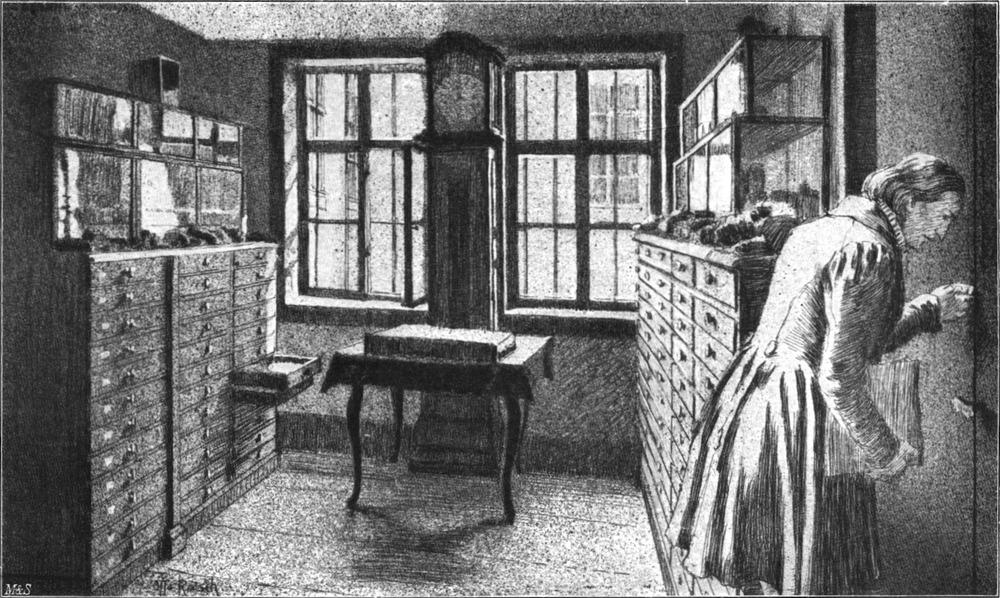 [Image credit: www.gutenberg.org]
Goethe was not simply proposing that readers should collect books from different countries. His idea went deeper. He believed that literature could create an intellectual exchange between cultures, allowing people to encounter experiences and ideas beyond their immediate surroundings.
The world Goethe inhabited was already becoming more interconnected. Translations were circulating more widely, newspapers carried news from distant countries, and European intellectuals were increasingly curious about cultures beyond their own. Goethe noticed this movement and recognised that literature could become one of its most powerful vehicles.
He famously observed that “national literature is rather an unmeaning term” and that an age of world literature was forming. For Goethe, this did not mean that national traditions would disappear. German literature would remain German, just as Persian, Chinese or French literature would retain its distinctive character. What mattered was the conversation between them.
A reader could remain rooted in one literary tradition while discovering that another tradition had something to teach them.
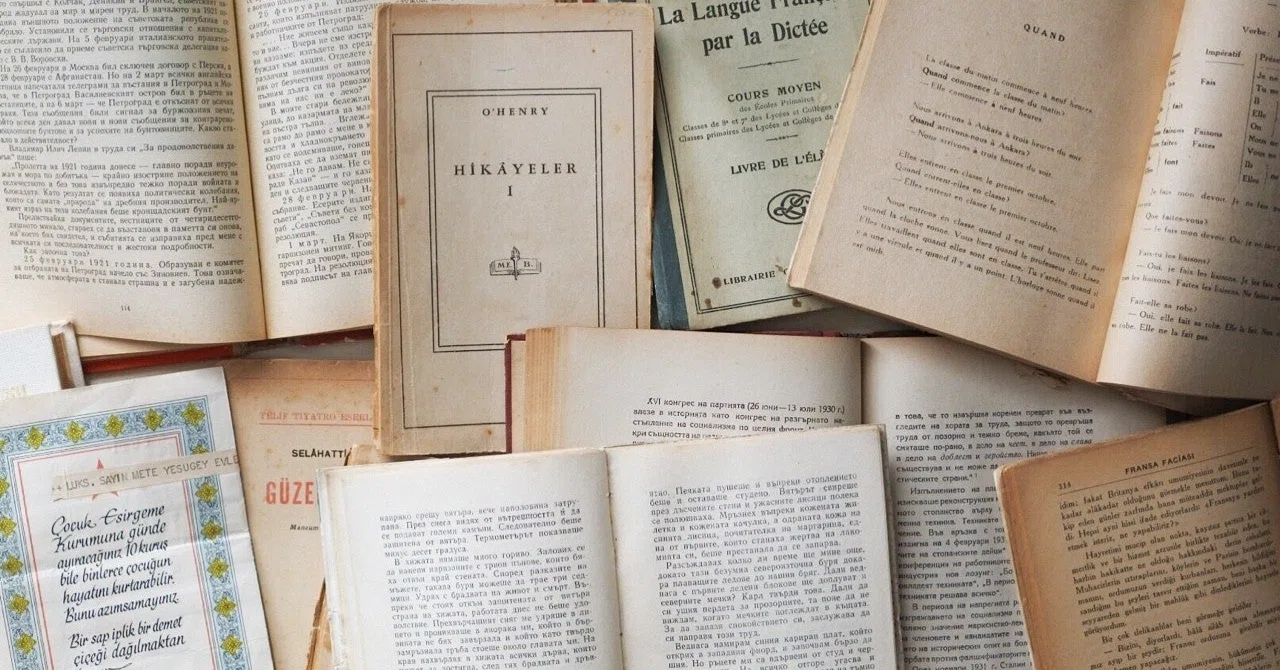
The World Comes to Us Through Translation
 [Image credit: www.note.com]
There is, however, a practical problem at the heart of World Literature: most of us cannot read every language.
That makes translation essential.
Goethe himself encountered foreign literature largely through translations, reports and conversations. His enthusiasm for Chinese literature, for instance, helped shape his thinking about the universality of human experience. He became fascinated by the possibility that a work could emerge from a completely different culture and yet produce emotions and recognisable human situations.
Translation, therefore, becomes more than a technical exercise. It becomes a bridge.
When an Indian reader picks up Gabriel García Márquez, a Japanese reader discovers Virginia Woolf, or an American reader encounters Rabindranath Tagore, the experience is shaped by translation. The words have crossed a linguistic border, but the story has crossed something larger: a cultural boundary.
Of course, translation is never perfectly neutral. Choices of vocabulary, rhythm and tone can impact the essence of a text. Yet without translation, Goethe’s literary world would remain largely theoretical.
Why We Still Read Across Cultures
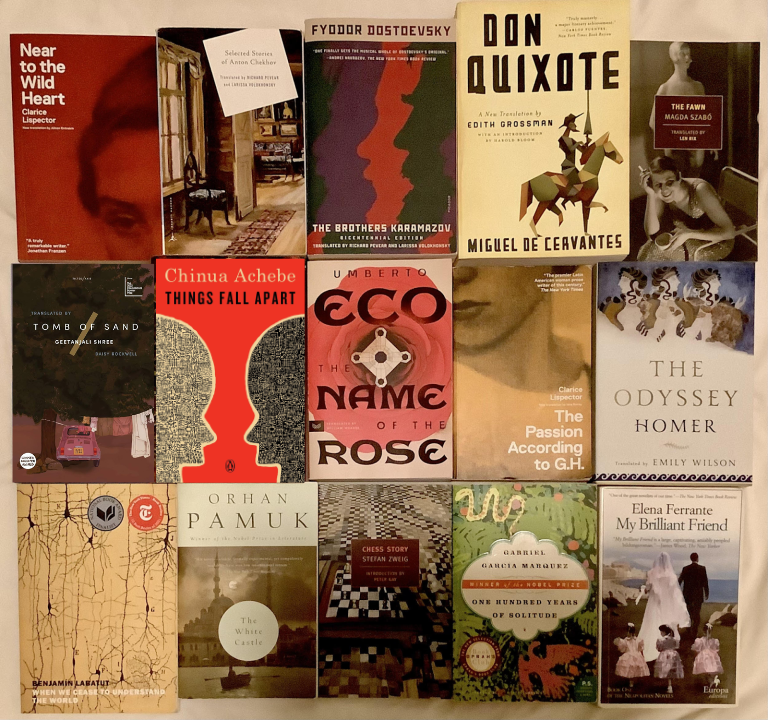
Walk into a contemporary bookstore, and Goethe’s vision is everywhere.
The international bestseller sits beside the local novel. Translated fiction occupies its own shelves. Literary prizes increasingly celebrate writers whose work travels across languages and continents. Digital publishing has made it easier than ever to discover authors from places a nineteenth-century European reader could scarcely have imagined reaching.
Consider the global journeys of books such as One Hundred Years of Solitude, The Tale of Genji, Things Fall Apart or The God of Small Things. Their settings may be deeply rooted in particular histories and cultures, but their readership extends far beyond those origins.
This is one of the paradoxes of World Literature: the more specific a book can be about its own world, the more powerfully it can sometimes travel into someone else’s.
A village in Nigeria, a family in Kerala, a neighbourhood in Tokyo or a house in nineteenth-century Russia can become strangely familiar to readers thousands of miles away.
But Is “World Literature” Really Universal?
 [Image credit: www.thenoveltourist.com]
Goethe’s idea also raises uncomfortable questions.
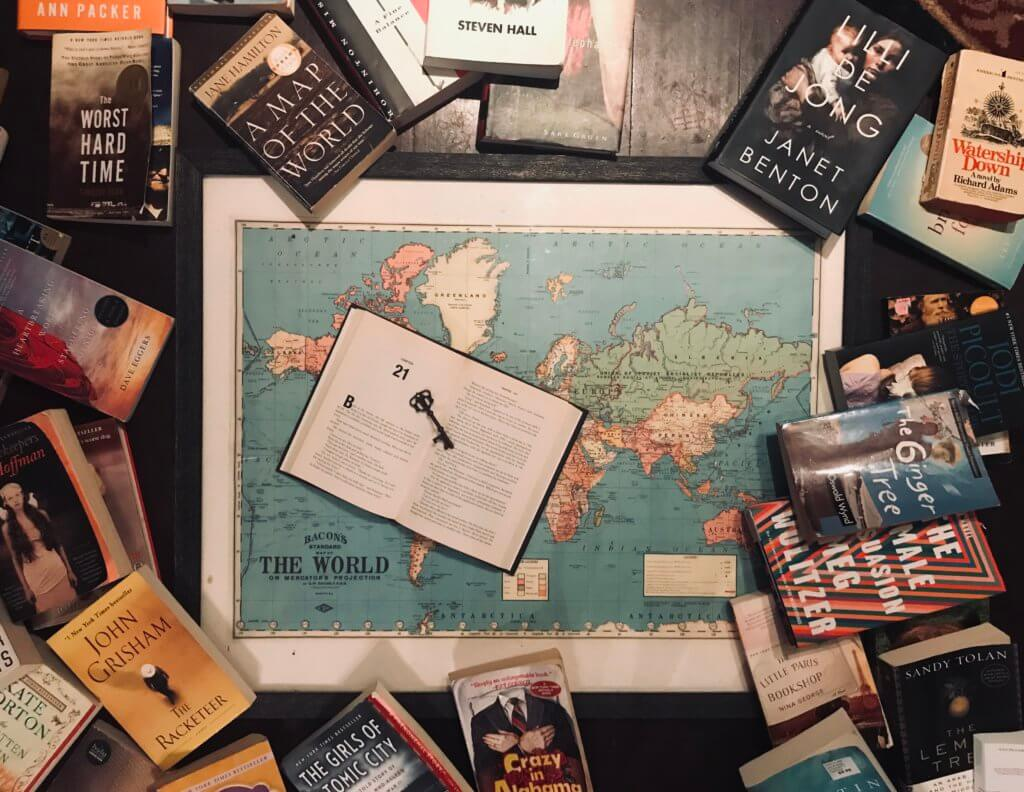
Who decides which books represent the “world”? Why do some authors travel internationally while others remain largely unknown outside their countries? Why are certain languages translated into English and other major languages far more frequently than others?
Modern scholars have pointed out that World Literature can sometimes become too centred on Western publishing systems, translation markets and academic institutions. A book does not become “world literature” simply because it is universally relevant. It often needs publishers, translators, critics and readers to carry it across borders.
Antoine de Saint-Exupéry’s The Little Prince is a striking example. Translated into more than 650 languages and dialects, it is the world’s most translated book—showing how translation and cultural networks can transform a local work into a global literary phenomenon.
This makes Goethe’s idea both inspiring and complicated.
The world literary canon is not a neutral map. It reflects power, economics, history and access.
Buy here: The Little Prince
Reading as an Act of Encounter
 [Image credit: www.summer.uchicago.edu]
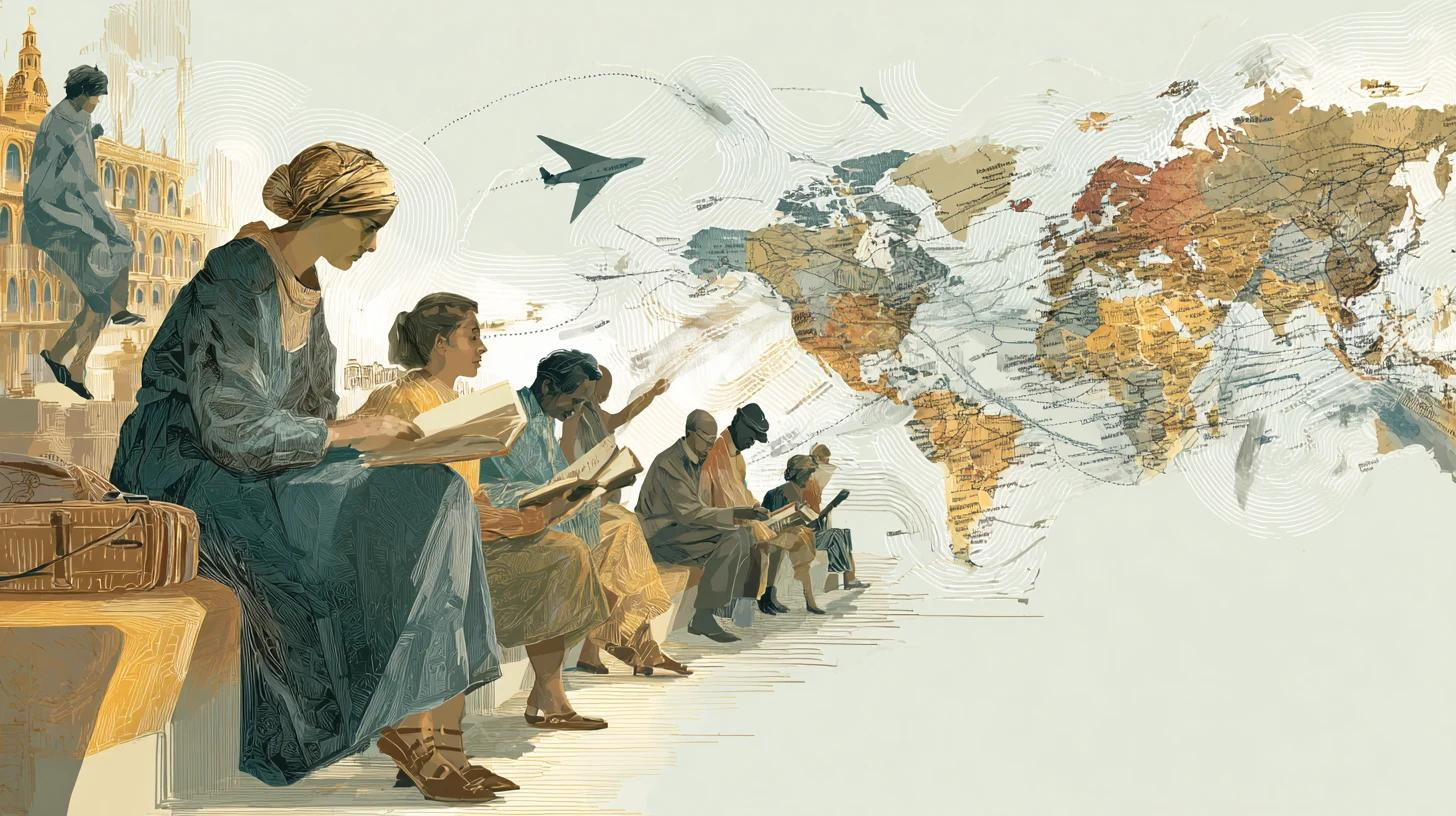
And yet, the enduring strength of Goethe’s idea lies in something wonderfully simple: reading can make the unfamiliar less distant.
A novel does not require us to share the same language, religion, geography or history as its characters before it can move us. Literature allows us to encounter lives that are not our own without reducing them to statistics or headlines.
That does not mean every culture is secretly the same. Quite the opposite. Good world literature makes us notice differences as much as similarities. It asks us to understand a world on its own terms before deciding what it means to us.
Perhaps that is why Goethe’s two-century-old idea still feels so relevant. We now have more opportunities than he could have imagined to read across borders. The challenge is no longer simply gaining access to the world's literature. It is learning how to read it with curiosity rather than assumptions.
The World Is Still Reading
Goethe could not have predicted e-books, international book fairs, streaming adaptations, online reading communities or a reader in India discovering a novelist from South Korea with a few clicks. But he recognised something fundamental long before the technology existed: literature becomes richer when it enters into conversation with other literature.
World Literature, then, is not merely a list of books from different countries. It is a way of reading—a willingness to let another culture interrupt our assumptions, expand our imagination and occasionally make us see our own world differently.
Nearly 200 years after Goethe began imagining a literary conversation without borders, perhaps the most exciting thing about reading remains exactly that: a book can begin somewhere else and still find a home in us.
Your next read: One Stormy Night, One Ghost Story Contest: How Mary Shelley's Frankenstein Was Born