

Parent Categories

Related blogs


Related Products



Related Books
From Devdas to Srikanta: Exploring Sarat Chandra Chattopadhyay’s Literary World
 Sarat Chandra Chattopadhyay’s Literary World
Indian literature is filled with unforgettable tales of love, loss, and longing, and few stories have captured the imagination of readers and filmmakers quite like Devdas. The tragic romance has travelled across languages and generations, becoming one of the most celebrated stories in Indian popular culture. Behind this timeless tale was a writer whose own life and literary world were equally fascinating—Sarat Chandra Chattopadhyay.

One of the most widely read Bengali novelists of the early twentieth century, Sarat Chandra Chattopadhyay was known for his storytelling and his deep understanding of human emotions.
His literary world explored the many shades of love, social injustice, anti-colonial sentiments, the consequences of patriarchy for women, and deeply introspective themes. His works are rich with depictions of both the internal and external turmoils of human life.
And today, on his birth anniversary, we take a look at the rich literary world of Sarat Chandra Chattopadhyay and the complexities, contradictions, and emotions of everyday life.
Also read: 5 Things Hermann Hesse Did Before Writing Siddhartha That Will Surprise You
A Life That Influenced His Literary World
Sarat Chandra’s fiction cannot be separated from the world he inhabited. Born on September 15, 1876, in Devanandapur in Bengal’s Hooghly district, he grew up in a family that struggled with financial insecurity. Poverty disrupted his education and prevented him from completing his studies, bringing him into close contact with the economic hardships faced by ordinary people. His fiction repeatedly returned to the lives of the rural poor, the lower and middle classes, and people caught within rigid structures of caste, class and social convention.
A significant chapter of his life began when he moved to Burma, present-day Myanmar, in search of employment. He spent more than a decade there, working in different jobs and living among labourers, artisans and members of the Indian diaspora. The experiences and observations he gathered during these years broadened his understanding of society and would later find their way into works such as Srikanta and Pather Dabi.
Devdas: The Emotional Genius of Sarat Chandra Chattopadhyay
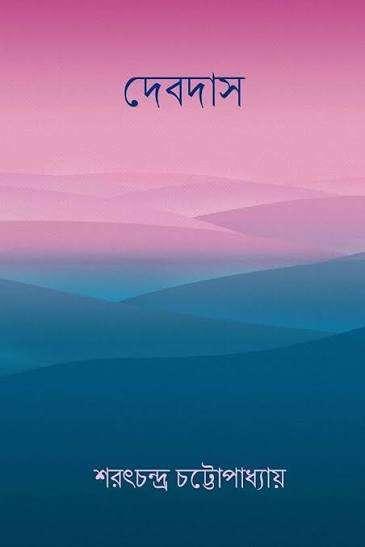
Devdas may appear to be a familiar tragic romance, but beneath its simple story lies extraordinary emotional complexity. Written when Sarat Chandra Chattopadhyay was still young and published in 1917, it follows Devdas, whose love for his childhood friend Paro is thwarted by social conventions. Unable to defy his family, he descends into alcoholism and self-destruction.
The novel’s power lies in its characters: Devdas is weak and indecisive, while Paro displays remarkable resilience. Chandramukhi, a courtesan condemned by society, embodies selfless love. Together, they reveal how social rigidity, patriarchy and personal weakness can destroy human happiness.
Srikanta: A Journey Through Life, Love and Freedom
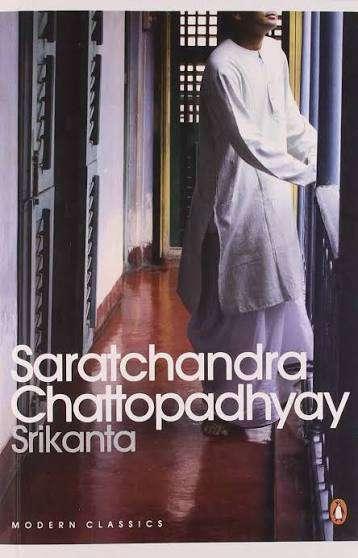
Among Sarat Chandra Chattopadhyay’s most ambitious works, Srikanta is an exploration of a changing society and the many lives that exist beyond its conventions. The novel follows its titular protagonist, Srikanta, as he travels through different places and encounters people from diverse social backgrounds.
Often described as semi-autobiographical, the novel moves beyond the boundaries of conventional Bengali society and introduces readers to communities and characters often pushed to its margins. At the heart of the novel are its remarkable female characters, including Rajlakshmi and Abhaya. Through their lives, Sarat Chandra examines love, independence and the restrictive social codes imposed on women. These characters are not merely supporting figures in Srikanta's journey; they possess their own desires, contradictions and struggles, often challenging the moral expectations of the society around them.
There is no straightforward heroic journey or easy resolution in this novel. Instead, Sarat Chandra allows life to unfold in all its uncertainty and complexity.
Pather Dabi: An Unapologetic Challenge to British Colonial Rule
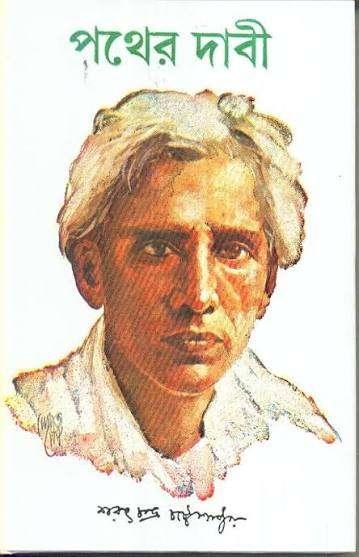
You can’t talk about Sarat Chandra without talking about Pather Dabi. It revealed a far more politically charged side of his literary world. Published in book form in 1926 after being serialised in the Bengali journal Bangabani, the novel was one of his most controversial works—and an unapologetic critique of British colonial rule in India.
Set largely in Burma, then a part of the British Empire, Pather Dabi revolves around a secret revolutionary organisation of the same name. At its centre is Sabyasachi, an enigmatic and charismatic revolutionary who becomes the embodiment of resistance against colonial oppression. Through the organisation's activities, Sarat Chandra explored racial discrimination, economic exploitation and the unequal treatment of Indians under British rule.
The novel did not merely hint at dissatisfaction with colonialism. Its revolutionary politics and scathing criticism of the British administration were direct enough to alarm the colonial government. Pather Dabi was banned in January 1927 on charges of sedition, only months after its publication. The ban remained in place until 1939, a year after Sarat Chandra's death.
Sarat Chandra’s Literary World Beyond Devdas
Sarat Chandra Chattopadhyay’s literary world extends far beyond his most famous novels. Works such as Parineeta, Charitraheen, Griha Daha, Palli Samaj and Datta reveal his remarkable range as a writer.
What continues to make Sarat Chandra relevant is his ability to find extraordinary emotional depth in ordinary lives. His characters are flawed, vulnerable and often caught between personal desires and the expectations of society. And more than a century later, Sarat Chandra’s stories continue to resonate because the complexities of the human heart remain timeless.
Your next read: 5 Anita Desai Books That Capture Loneliness Beautifully