

Parent Categories


Related Products


Related Books


Hills, Ghosts, & Guava Trees: How Ruskin Bond Taught a Generation to Fall in Love with Reading
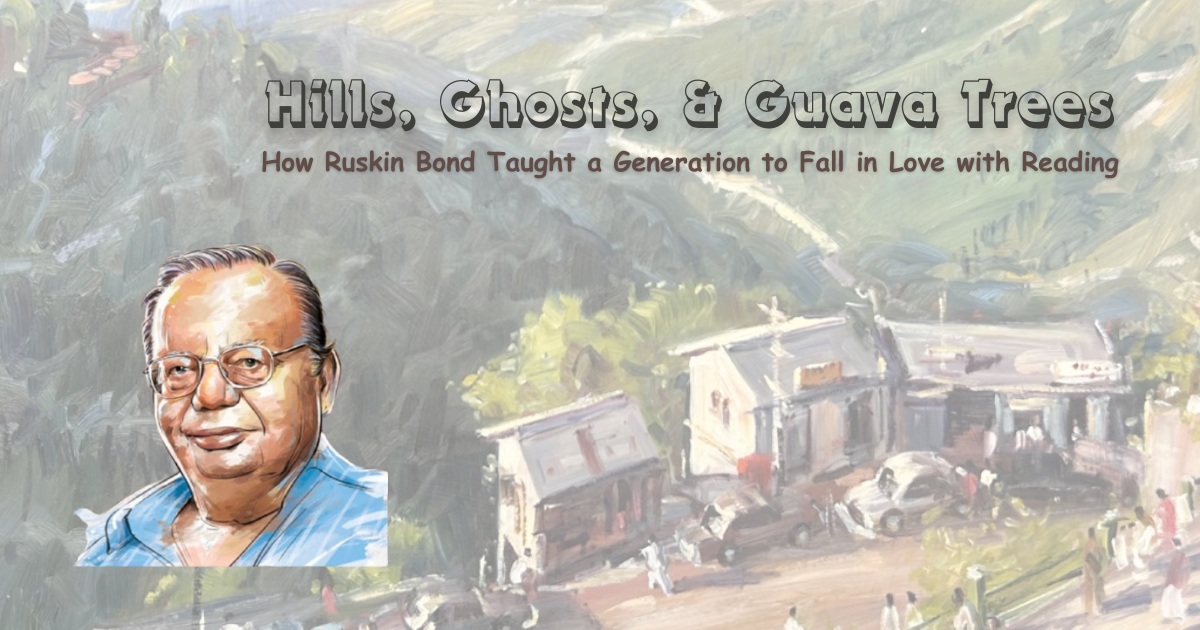 Ruskin Bond
There are some writers we admire, and then there are writers who quietly move into our childhoods and never really leave. Ruskin Bond belongs firmly to the second category. For generations of Indian readers, especially those growing up before endless scrolling and streaming took over childhood afternoons, Bond was not merely an author. He was a companion. A familiar voice. A gentle guide into the world of books.
Long before many readers discovered literary ‘classics’, they discovered mist-covered hills, lonely railway stations, haunted rooms, old bungalows, mischievous monkeys, and guava trees through Bond’s stories. His worlds were small in scale but immense in feeling. And perhaps that is precisely why they endured.
In an age where children’s literature often tries very hard to impress, Bond’s writing did something rarer: it comforted.
Also read: 8 Classics That Hit Completely Differently When You Re-Read Them as an Adult
The Magic of the Ordinary
One of the most remarkable things about Bond’s writing is how little ‘happens’ in many of his stories. There are no sprawling wars, no dystopian governments, no chosen heroes destined to save the world. Instead, there is rain falling softly on tin roofs. A boy walking through the hills. An old man waiting at a station. A child climbing a guava tree.
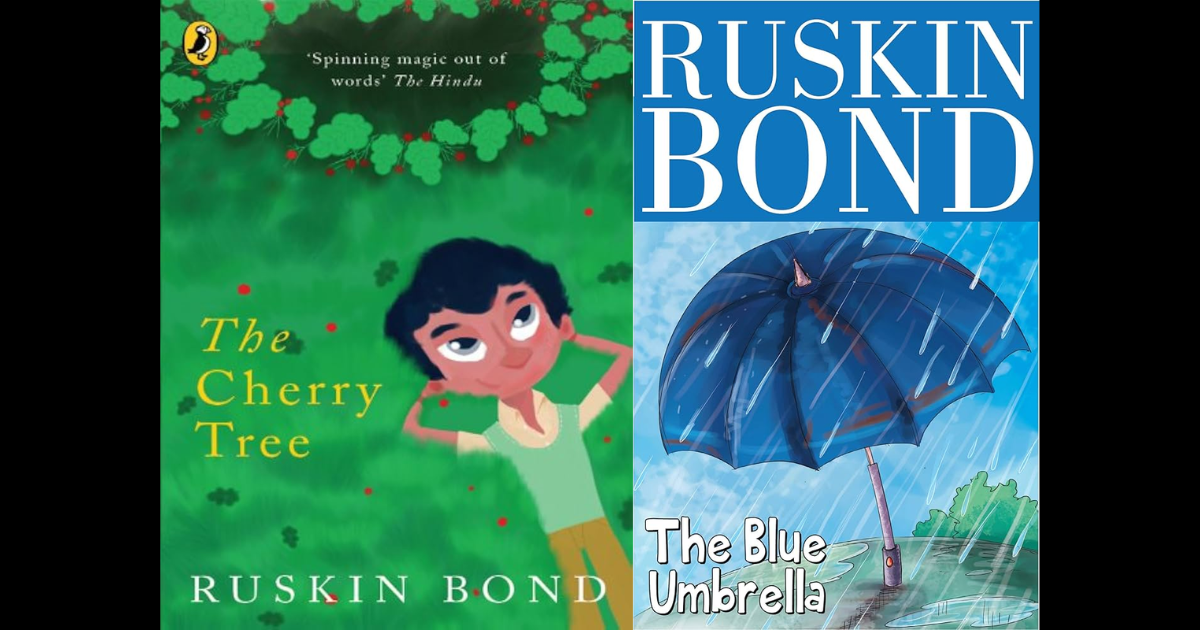
Stories like The Cherry Tree and The Blue Umbrella perfectly capture this quality. In The Cherry Tree, the planting of a tiny seed becomes an emotional meditation on patience, growth, and companionship. Meanwhile, The Blue Umbrella transforms something as ordinary as a bright umbrella into a story about envy, kindness, and innocence in a small Himalayan village.
And yet, readers remained utterly captivated.
Bond understood something many writers forget: ordinary life is never truly ordinary when observed carefully. He had the ability to turn the smallest moments into something luminous. A cup of tea shared on a cold evening could carry emotional weight. A lonely road in the mountains could feel magical. Even silence became meaningful in his stories.
For children, especially, this was transformative. Bond taught young readers that stories did not need spectacle to matter. Wonder could exist in everyday life if one learned how to look closely enough.
Mussoorie Became a Literary Landscape
For countless readers who had never visited the hills, Bond’s writing created an emotional geography of the Himalayas. Through him, places like Mussoorie and Dehradun became more than tourist destinations. They became living literary spaces.
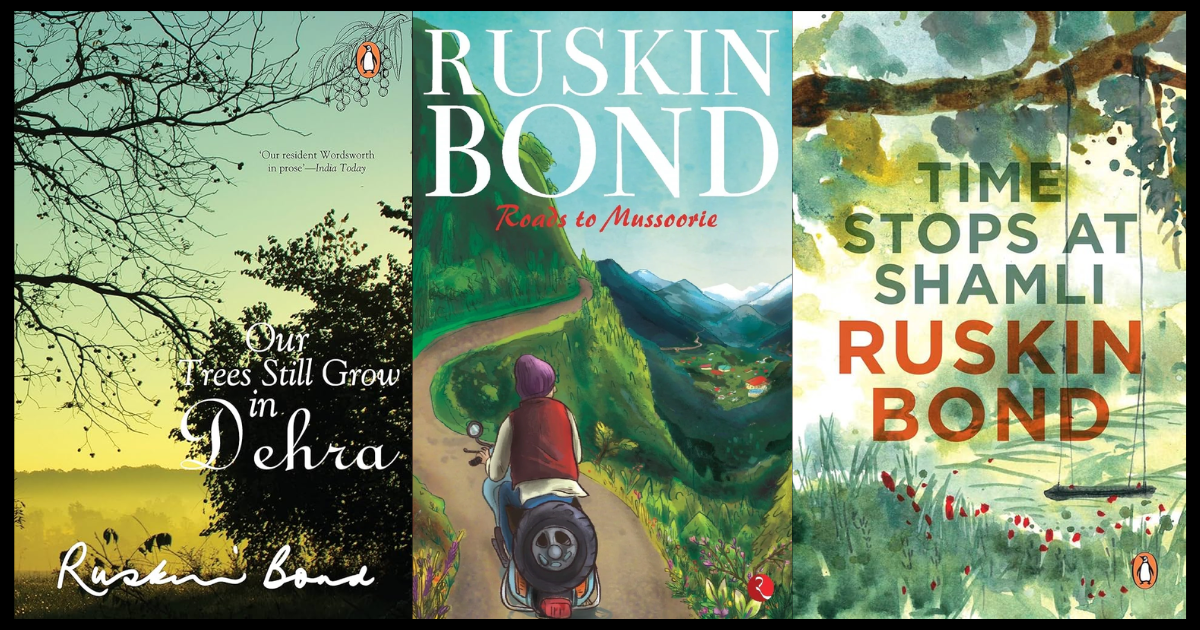
Books like Our Trees Still Grow in Dehra and Roads to Mussoorie are deeply rooted in these landscapes. In these works, the hills are not just backdrops but emotional presences that shape memory, solitude, and belonging. Even in stories such as Time Stops at Shamli, a sleepy small town acquires dreamlike beauty simply because Bond observes it with affection and patience.
The hills in his stories are rarely dramatic in the postcard sense. They are intimate and inhabited. There are winding roads, hidden cottages, forests whispering with secrets, and little bazaars filled with familiar faces. Nature is never treated as scenery alone; it breathes alongside the characters.
Perhaps this is why readers often remember the feeling of Bond’s settings long after forgetting specific plots. His hills evoke nostalgia even for people who have never lived in them.
There is also something deeply Indian about the landscapes he captures. Bond’s India is not the loud, hyper-urban India that dominates much contemporary storytelling. It is slower, quieter, and rooted in small human interactions. Reading him often feels like stepping into a version of the country that still exists somewhere, if one is willing to slow down enough to notice it.
Ghost Stories Without Nightmares
Few writers introduced children to fear as gently and memorably as Bond did.
His ghost stories occupy a strange and beautiful middle ground: eerie enough to thrill young readers, but never cruel enough to traumatise them. Stories like A Face in the Dark and The Woman on Platform 8 carried mystery, loneliness, and melancholy alongside suspense.
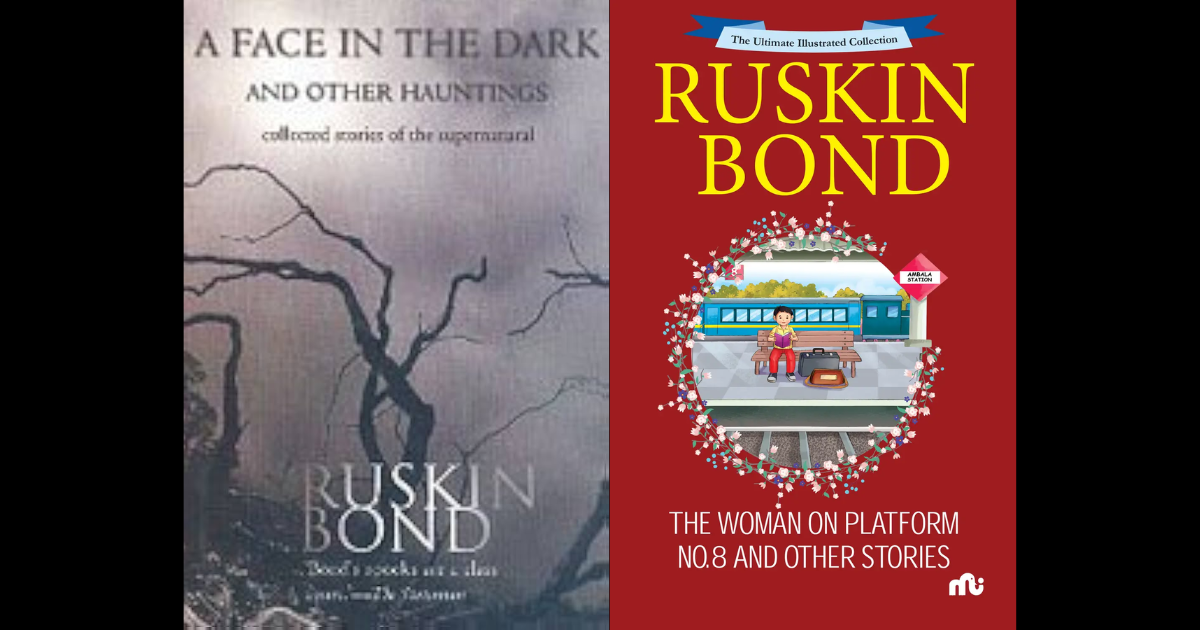
What made these tales unforgettable was not merely the supernatural element. It was atmosphere.
Bond knew how to suggest rather than explain. A shadow in the mist. Footsteps on an empty road. A flickering lantern. A room that feels just slightly too cold. The horror in his stories was soft-edged, allowing imagination to do most of the work.
For many young readers, these stories became a first introduction to the pleasure of reading under a blanket late at night, both frightened and unable to stop turning pages.
In doing so, Bond opened the door to literature itself. He showed children that books could create emotion physically—anticipation, comfort, fear, longing—all through words alone.
Children Were Taken Seriously
Another reason Bond connected so deeply with readers was his understanding of childhood. He never wrote down to children. He never treated their emotions as trivial or exaggerated.
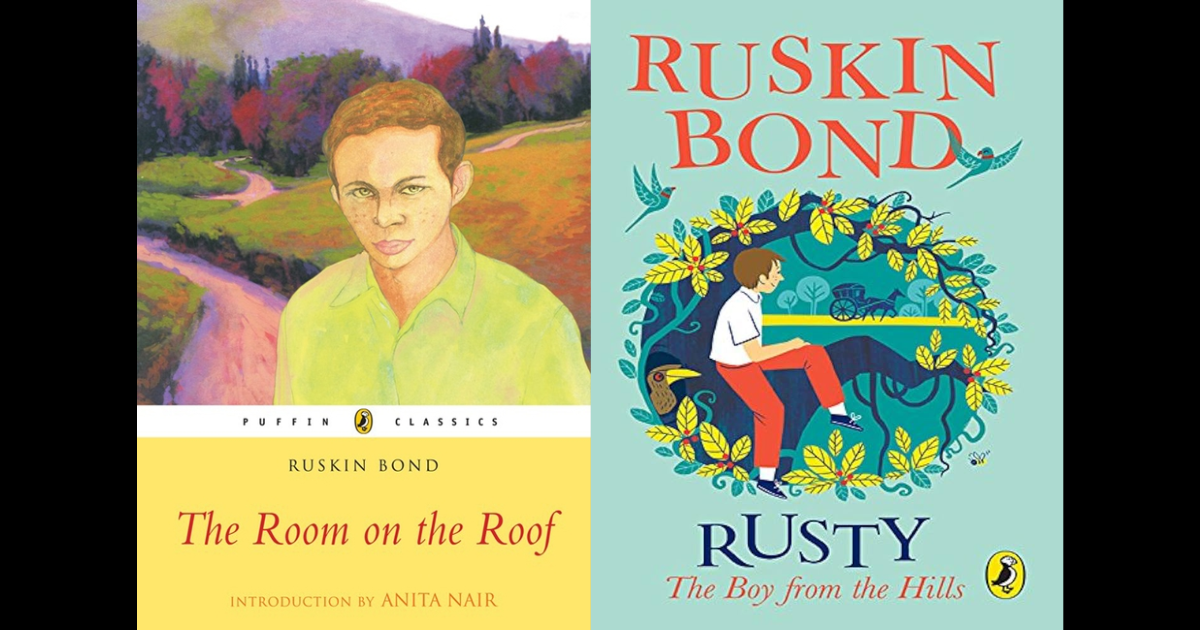
Stories such as The Room on the Roof and Rusty, the Boy from the Hills capture this emotional honesty beautifully. Rusty, perhaps Bond’s most beloved recurring character, experiences confusion, rebellion, loneliness, and joy with a sincerity that young readers instantly recognise. He is not an idealised child protagonist; he feels real.
Loneliness, friendship, jealousy, curiosity, grief—children in Bond’s stories experience all these feelings with sincerity. Adults may drift in and out of the narrative, but children remain emotionally central.
There is also freedom in his stories. His young protagonists wander through forests, explore abandoned places, befriend strangers, and observe the world independently. For many readers, especially those growing up in increasingly structured environments, this freedom felt intoxicating.
Bond captured the emotional texture of childhood itself: the long afternoons, the secret adventures, the strange mixture of fear and curiosity with which children approach the world.
Simplicity as Literary Strength
Modern literary culture sometimes mistakes complexity for depth. Bond’s writing quietly challenges that assumption.
His prose is famously simple, but simplicity is not the same as shallowness. In fact, writing simply while remaining emotionally resonant is extraordinarily difficult. Bond mastered that balance. His sentences are accessible enough for young readers yet layered enough for adults returning to them years later.
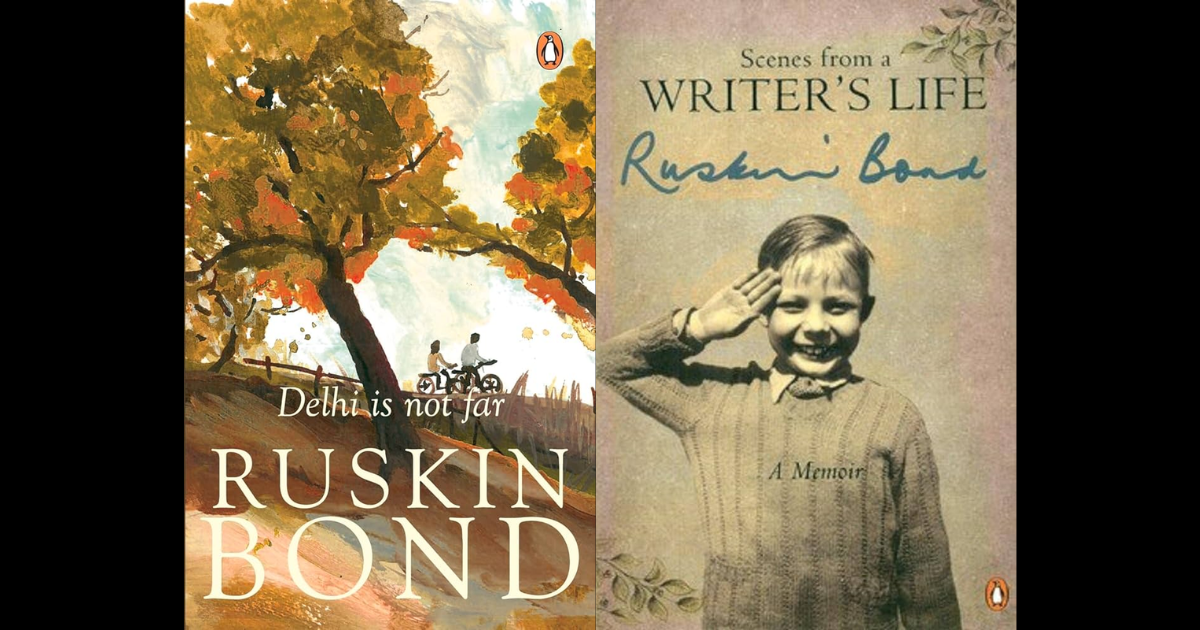
Books like Delhi Is Not Far and essays from Scenes from a Writer’s Life reveal this particularly well. The language is unpretentious, almost conversational, but the emotional undercurrents run deep. Even a passing observation about a street, a memory, or a changing season can suddenly carry profound melancholy.
That is why rereading Bond as an adult can feel surprisingly emotional. Beneath the charm lies an undercurrent of solitude, impermanence, and tenderness. His stories understand loss—of people, places, childhood, and time itself.
Perhaps children sense this emotional honesty instinctively, even before they fully understand it.
Why He Still Matters
In today’s attention economy, where stories are often designed for speed and instant stimulation, Bond’s writing feels almost radical. He asks readers to pause. To observe. To listen to rain. To notice trees. To appreciate silence.
And generations did.
Many Indian readers can trace their lifelong relationship with books back to a Ruskin Bond story encountered in a school library, an old textbook, or a dog-eared paperback passed between cousins. He made reading feel warm rather than intimidating. Personal rather than academic.
For countless children, Bond became the bridge between compulsory reading and reading for pleasure.
That may be his greatest legacy.
Not merely that he wrote beloved stories, but that he quietly created readers. Readers who learned, through hills and ghosts and guava trees, that books could become places one returned to for the rest of one’s life.
Your next read: 8 Classic Novels That Became the Movies & Shows Everyone's Talking About