

Parent Categories

Related blogs


Related Products


Related Books

5 Reasons Flowers for Algernon by Daniel Keyes Still Breaks Readers' Hearts
 Flowers for Algernon by Daniel Keyes
Many people have the privilege of pursuing the careers they dream of. Daniel Keyes wasn't one of them. Before becoming one of science fiction's most celebrated authors and writing Flowers for Algernon, Keyes followed his parents' wish to become a doctor. Life took him through a series of odd jobs and different professions before he could call himself a writer.
 [Image Credit: Beth Gwinn/Writer Pictures]
Flowers for Algernon was the story he placed his faith in. What began as a short story eventually grew into a full-length novel, earning the admiration of literary giants like Isaac Asimov and winning the Hugo Award for Best Short Story in 1960. From selling just 5,000 copies to selling more than five million copies worldwide, this timeless classic has continued to move readers for decades.
On his birthday, let’s figure out the reasons why Flowers for Algernon continues to break readers' hearts, year after year.
A Preview of Flowers for Algernon
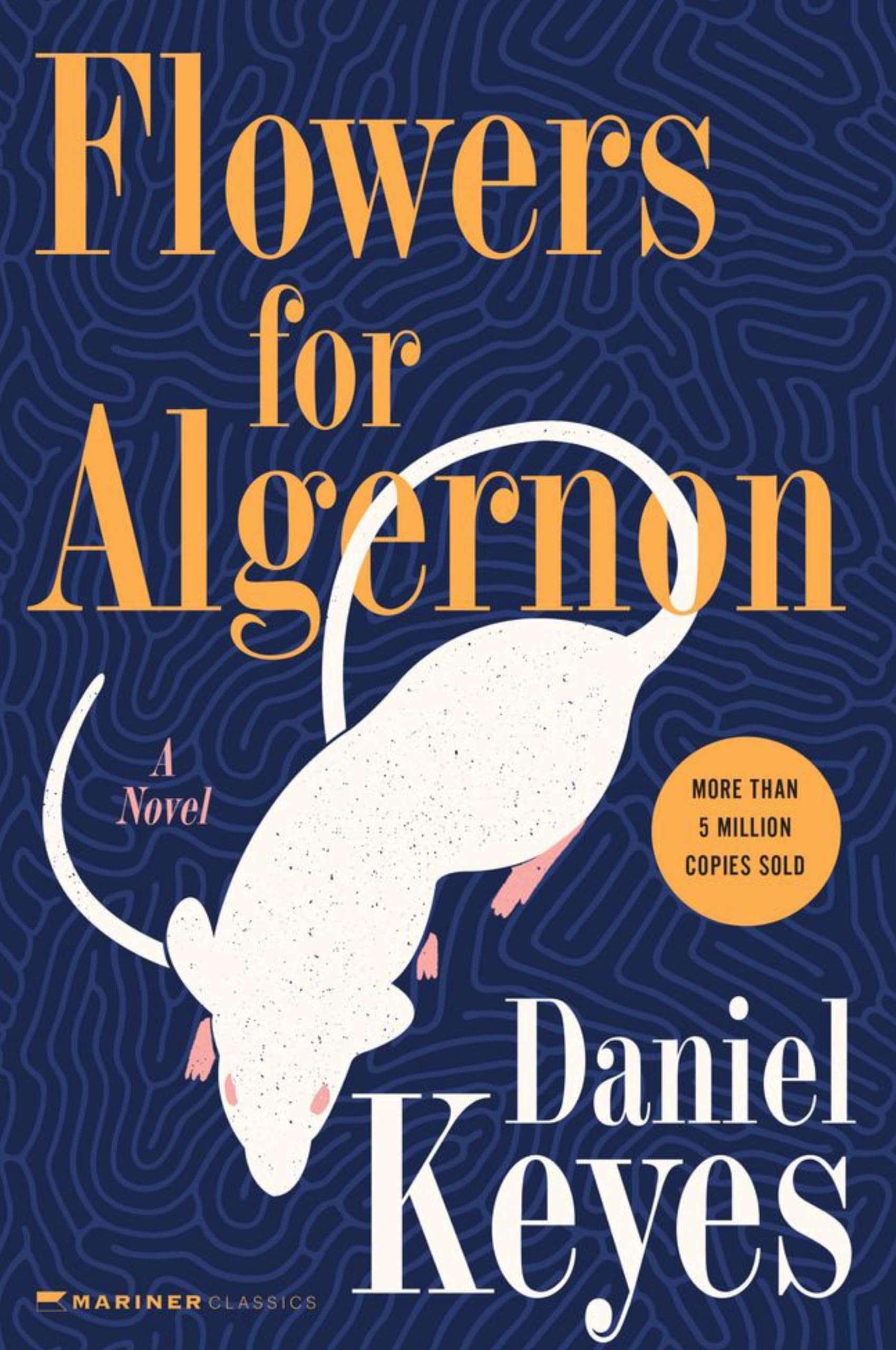
For those unfamiliar with it, Flowers for Algernon is the story of Charlie Gordon, a 32-year-old man with an intellectual disability who dreams of becoming smarter. When he is chosen for an experimental procedure that promises to increase his intelligence, Charlie's life changes in ways he never imagined. The procedure is first tested on Algernon, a white laboratory mouse whose extraordinary intelligence gives the novel both its title and its emotional heart.
Rather than relying on a traditional third-person narrator, the novel unfolds through Charlie's own "progress reports". It is this intimate, first-person perspective that makes Charlie's journey feel so personal, allowing readers to experience every triumph and every loss alongside him.
Why Flowers for Algernon Leaves An Ache in the Heart (Spoiler Alert)
Reason 1: It Wasn’t about Greatness. Charlie Longed to Be Accepted

“There are a lot of people who will give money or materials, but very few who will give time and affection.”
Like most of us, deep down, Charlie doesn’t dream of becoming extraordinary. He simply wants to be accepted. He wants to be smart so that he could learn, make genuine friends, and be treated with the same kindness and respect as everyone else.
The most heartbreaking part is that Charlie genuinely believed the people around him liked him. Because of his intellectual disability, he couldn't recognise that many of them were mocking him rather than laughing with him. As his intelligence grew, so did his awareness. The story slowly stopped being about becoming smarter and became a painful journey of discovering how lonely and misunderstood he had always been.
Reason 2: It Hurts to See How Badly You Were Treated in the Past
“Only a short time ago, I learned that people laughed at me. Now I can see that unknowingly I joined them in laughing at myself. That hurts the most.”
As his intelligence grows, so does his emotional awareness. Charlie begins to revisit memories that once seemed happy and innocent. He realises that the people he thought were his friends were not really his friends. The jokes he enjoyed were cruel, and the kindness he believed he received was often pity or manipulation.
Daniel Keyes beautifully captures the pain of looking back at your own life with new eyes. Charlie is forced to relive years of humiliation, betrayal, and loneliness, making the emotional wounds feel fresh all over again. It is a reminder that sometimes, the truth can hurt far more than ignorance ever did.
Reason 3: Intelligence Doesn't Solve Loneliness
“Strange about learning; the farther I go the more I see that I never knew even existed. A short while ago I foolishly thought I could learn everything - all the knowledge in the world. Now I hope only to be able to know of its existence, and to understand one grain of it. Is there time?”
For much of the novel, Charlie believes that becoming smarter will solve all of his problems. In many ways, it does. He learns at an astonishing pace, surpasses the very scientists who transformed him, and earns the admiration of people who once dismissed him.
Instead, it creates a different kind of loneliness. The friends he once trusted can no longer relate to him, while the scientists and academics around him see him more as a remarkable experiment than as a person. Charlie finds himself caught between two worlds, belonging fully to neither.
Through Charlie's journey, Daniel Keyes makes a powerful point: intelligence may open doors, but it cannot replace genuine human connection. In the end, kindness, empathy, and acceptance prove to be far more valuable than brilliance alone.
Reason 4: Charlie Had No Control Over His Own Transformation
“Just leave me alone. I'm not myself. I'm falling apart, and I don't want you here.”
Charlie volunteered for the experiment because he believed it would finally give him the life he had always wanted. But once the procedure was over, his fate was no longer his own.
He had no control over becoming a genius, just as he had no control over losing everything he had gained. As Algernon's condition began to deteriorate, Charlie knew the same fate awaited him. He was forced to watch himself slowly lose his memories, his abilities, and the identity he had worked so hard to build.
What makes this so heartbreaking is Charlie's awareness. He knows exactly what is happening to him and fights desperately to find a solution, only to realise that some tragedies cannot be undone.
Reason 5: "P.S. please if you get a chance put some flowers on Algernon's grave in the back yard."

Few endings in literature are as heartwrenching as Charlie Gordon's final request.
After everything he has endured—his brief brilliance, the painful realisation of his past, and the slow loss of his intelligence—Charlie doesn't ask to be remembered. He doesn't curse the experiment or blame the scientists. Instead, his thoughts turn to Algernon, the little white mouse who walked the same path before him.
That final line is devastating because it reminds us that, despite everything Charlie gained and lost, his kindness never changed. Intelligence came and went, but his compassion remained. Algernon was more than just a laboratory mouse; he was Charlie's companion in a journey neither of them chose.
In just one sentence, Daniel Keyes reminds us that what truly defines a person isn't their intelligence—it's their capacity for empathy.
What Stays After Reading Flowers for Algernon
Daniel Keyes' Flowers for Algernon leaves readers with a lingering ache, but it also leaves behind lessons that stay with us for a lifetime. Long after the final page, many find themselves thinking about Charlie Gordon—not because of his intelligence, but because of his unwavering kindness, resilience, and capacity for empathy.
The novel reminds us that intelligence is not the measure of a person's worth. Acceptance, compassion, and human connection matter far more. Charlie's journey encourages us to look beyond labels and treat every person with the dignity and respect they deserve.
As we celebrate Daniel Keyes' birthday, Flowers for Algernon remains a testament to his extraordinary ability to explore the human condition with honesty and heart.
Your next read: James Baldwin on Identity, Race and Love: His Words, Explained