

Parent Categories

Related blogs


Related Products



Related Books


The Ancestor He Was Haunted By: How the Salem Witch Trials Shaped Nathaniel Hawthorne's Writing
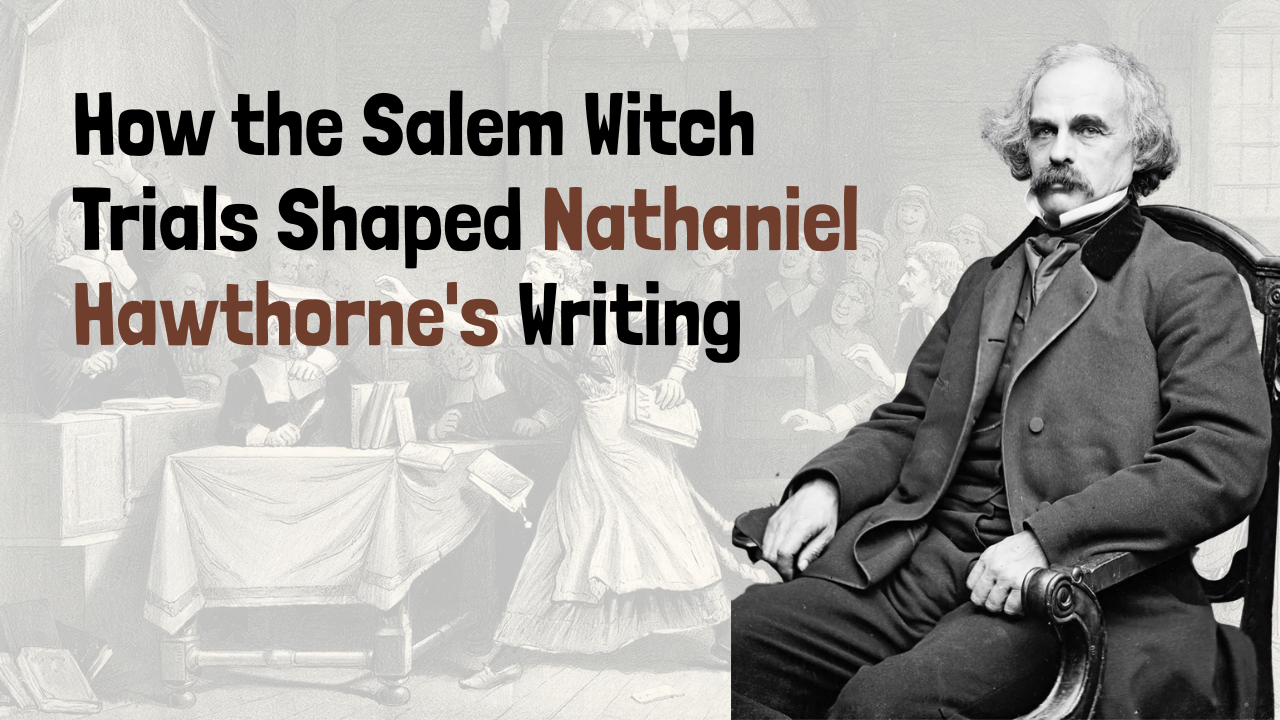 Salem Witch Trials & Nathaniel Hawthorne
Every family inherits stories. Some inherit tales of bravery, some of sacrifice, others of love that survives generations. And then there are families who inherit ghosts of the past. Nathaniel Hawthorne, a famous American short story writer and novelist, belonged to the latter.
That ghost was his own great-great-grandfather, John Hathorne—a respected Puritan magistrate in colonial Massachusetts and one of the leading judges of the Salem Witch Trials of 1692. Nearly a century and a half later, his descendant would spend an entire literary career wrestling with questions of inherited guilt, public shame, and whether people can ever escape the sins of their past.
On his birthday, let's walk through Nathaniel Hawthorne's life and why an ancestor he never met still shaped everything he wrote.
Also read: Walt Whitman, Dead Poets Society & the Poem That Made a Generation Stand on Their Desks
Nathaniel Hawthorne Early Life in Salem
 [Image Credit: Britannica]
Nathaniel Hathorne (yes, ‘w’ came later) was born on July 4, 1804, in Salem, Massachusetts. His father, Nathaniel Hathorne Sr, was a sea captain who died of yellow fever when Hawthorne was only four years old. His early death left the family in financial uncertainty, and Hawthorne was largely raised by his mother, Elizabeth Clarke Manning Hathorne. Widowed with three young children and no income of her own, she moved the family into her relatives' household, the Mannings, where they would live for the next decade. Hawthorne grew up in their house in Salem and, for extensive periods during his teens, in Raymond, Maine, on the shores of Sebago Lake.
Salem and Its Past of Witchcraft Hunting
 [Image Credit: History.com]
Nathaniel Hawthorne was born in a place with a gloomy history, and his ancestors played a significant role in it. His ancestors weren't ordinary Puritans—they were the Puritans. William Hathorne, his great-great-great-grandfather, was a magistrate notorious for having a Quaker woman publicly whipped. His son, John Hathorne, sat as one of the judges of the Salem Witch Trials, the deadliest witch hunt in the history of colonial North America. Hawthorne grew up in the same town where his ancestors had once presided over death sentences, and he grew up knowing exactly whose blood was on his hands.
Why Salem Witch Trials Haunted Nathaniel Hawthorne
 [Salem Village Witchcraft Victim’s Memorial, Danvers, Mass, 2013. Image Credit: Rebecca Brooks]
Although born much after the trials, Nathaniel Hawthorne was deeply troubled by his ancestral legacy. What made this history even more unsettling was what came afterwards. As public opinion turned against the trials, several officials admitted they had been wrong. But his ancestors never did. John Hathorne refused to accept his wrongs. He died in 1717 without publicly acknowledging any wrongdoing, leaving behind a legacy that history would remember with discomfort rather than honour.
Nathaniel often wrote as though the moral stain had passed down through generations. He famously altered the family name from Hathorne to Hawthorne, adding a single letter that many scholars interpret as an attempt to distance himself from his ancestor's reputation.
The Ghosts of Salem in Nathaniel's Writings
Nathaniel Hawthorne never wrote a novel about the Salem Witch Trials themselves. Instead, he wrote about what the trials revealed about human nature.
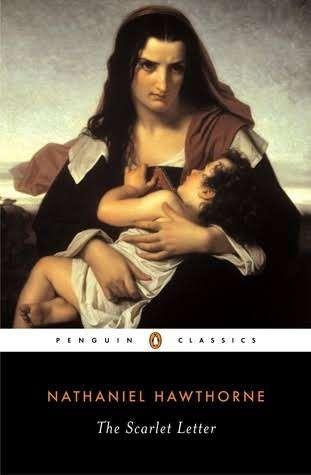
His breakthrough novel, The Scarlet Letter, is perhaps the clearest example. Set in Puritan Boston, it follows Hester Prynne, who is publicly shamed and forced to wear the scarlet letter "A" after being convicted of adultery. On the surface, the novel is about sin and punishment. Beneath it, however, Hawthorne asks a far more unsettling question: What kind of society believes that public humiliation is justice?

He explored inherited guilt even more directly in The House of the Seven Gables. The novel begins with an act of injustice that casts a shadow over generations of one family. Its central idea—that descendants continue to suffer because of an ancestor's wrongdoing—mirrors Hawthorne's own relationship with John Hathorne.
The Legacy Nathaniel Hawthorne Could Never Escape
Hawthorne could never escape what his ancestors did. But he did something very powerful with it. He turned his family's darkest legacy into one of American literature's greatest strengths. Rather than glorifying the Puritan past, he exposed its contradictions. Rather than offering simple heroes and villains, he created flawed, deeply human characters who forced readers to confront their own ideas of morality and judgment.
John Hathorne will be remembered for the injustice he helped perpetuate, while Nathaniel Hawthorne will be remembered for spending a lifetime examining why such injustice happens in the first place. One left behind a legacy of fear; the other transformed that legacy into literature that still asks us to question our own certainties.
Happy Birthday, Nathaniel Hawthorne!
Your next read: The Rooms, Silence & Routine of Anne Frank’s Hidden Life