

Parent Categories


Related Products


Related Books




James Baldwin on Identity, Race and Love: His Words, Explained
 James Baldwin
1924 was not the year to be born Black and queer in America. The country was deeply segregated, and James Baldwin entered a world determined to judge him by the colour of his skin. As if that weren't enough, he grew up in poverty in Harlem, raised by his mother and stepdad alongside eight siblings under difficult circumstances.
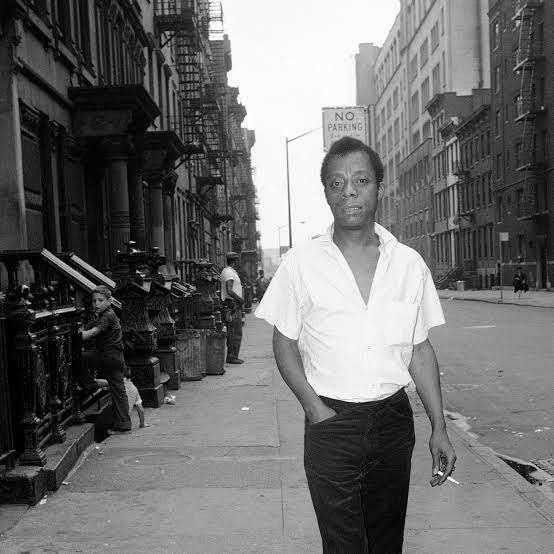 [Image Credit: The Guardian]
Few could have imagined that this African-American boy would become one of the greatest writers and public intellectuals of the twentieth century and would shape African American history. Through novels, essays, plays, and unforgettable speeches, Baldwin challenged America to confront its deepest contradictions—on race, identity, religion, sexuality, and love. His words were fearless yet deeply compassionate.
In this blog, we take a deeper look at James Baldwin's life and experiences that shaped his narrative and his writings about identity, race and love.
Also read: 8 Ernest Hemingway Short Stories That Showcase His Literary Genius
Life Experiences That Shaped James Baldwin’s Identity
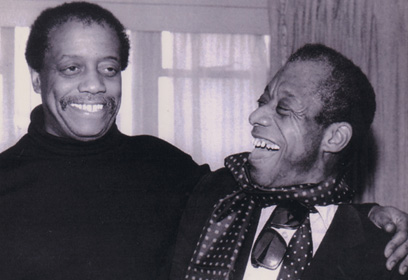 [David Baldwin with James Baldwin in the 1980s. Image Credit: Carole Weinstein]
A major part of Baldwin’s identity was shaped by his experiences with his stepfather, David Baldwin. David Baldwin was a Pentecostal preacher who was deeply religious, emotionally distant, and often harsh with his family. As a child, Baldwin feared him. As a teenager, he hated him. As an adult, he pitied him.
This emotional evolution is one of Baldwin's greatest strengths as a writer. Rather than reducing his stepfather to a villain, he came to understand him as a man broken by poverty, racism, and disappointment.
His famous essay Notes of a Native Son intertwines the death of his stepfather with the Harlem Riot of 1943. Baldwin realises that both his father's bitterness and the city's violence sprang from the same source: a society built on racial oppression.
“When he died I had been away from home for a little over a year. In that year I had had time to become aware of the meaning of all my father’s bitter warnings, had discovered the secret of his proudly pursed lips and rigid carriage: I had discovered the weight of white people in the world. I saw that this had been for my ancestors and now would be for me an awful thing to live with and that the bitterness which had helped to kill my father could also kill me.”
—James Baldwin, Notes of a Native Son
James Baldwin on Religion & Spirituality
Religion was one of the greatest paradoxes in James Baldwin's life. It gave him his voice, his command of language, and his understanding of human suffering. Yet it also became the institution he spent much of his life questioning.
 [Image Credit: CNN]
At the age of fourteen, Baldwin became a Pentecostal preacher at the Fireside Pentecostal Assembly in Harlem. For nearly three years, he preached sermons before packed congregations. Looking back, he admitted that the experience made him a writer more than anything else. Even after he left the church, he never abandoned its language.
However, Baldwin grew increasingly critical of organised religion. He believed many churches preached fear instead of freedom, encouraged people to endure injustice rather than challenge it, and often used scripture to justify racism and condemn homosexuality. Having experienced both racial discrimination and rejection because of his sexuality, Baldwin saw firsthand how religion could become a tool of exclusion rather than compassion.
In The Fire Next Time, Baldwin reflects on what faith ought to achieve rather than what institutions often make of it:
"If the concept of God has any validity or any use, it can only be to make us larger, freer, and more loving."
For Baldwin, religion was meaningful only when it inspired people to love more deeply, seek truth honestly, and fight for the freedom of others. For this reason, he never really stopped believing in spirituality, though he condemned it for all the right reasons.
James Baldwin on Love & Sexuality
For James Baldwin, love was never merely a romantic feeling, nor was sexuality simply about physical desire. Both were ways of understanding ourselves and confronting the fears that shape our identities.
In Another Country, Baldwin explores relationships across racial, sexual, and social boundaries. At one point, Vivaldo, a white man who begins to question both his identity and his relationships, reflects:
"Love was a country he knew nothing about."
Baldwin presents love as an unfamiliar country—one that cannot be entered with certainty, pride, or prejudice. To truly love another person requires vulnerability and the courage to leave behind the identities and assumptions that make us feel safe.

This idea appears throughout Baldwin's work. In Giovanni's Room, perhaps his most celebrated novel on sexuality, Baldwin examines the devastating consequences of denying one's true self. Rather than portraying homosexuality as the source of tragedy, Baldwin suggests that shame, fear, and social expectations are what destroy lives. The novel's protagonist, David, spends much of the story trying to escape his feelings rather than confront them, illustrating Baldwin's belief that people often imprison themselves long before society does.
Baldwin expressed this philosophy most powerfully in The Fire Next Time:
"Love takes off the masks that we fear we cannot live without and know we cannot live within."
The "masks" Baldwin describes are the false identities people construct to protect themselves. These masks may provide comfort, but they prevent genuine intimacy. Love, therefore, is not sentimental or effortless; it is an act of truth. It demands that we abandon illusion and allow ourselves to be fully seen.
Baldwin's Enduring Lessons on Identity, Race, and Love
Every lesson that James Baldwin has left behind asks us to look within. He refused to believe that racism was merely a Black problem, that identity was fixed, or that love was simply an emotion. Instead, he argued that the greatest battles are fought within ourselves—against fear, denial, prejudice, and the stories we inherit without ever questioning them.
The world has changed since he first put pen to paper, but many of the questions he asked remain unanswered. We still struggle with race and superiority issues. We still hide behind identities that divide us. We still mistake certainty for truth and comfort for justice.
Baldwin once wrote:
"Not everything that is faced can be changed, but nothing can be changed until it is faced."
That sentence asks us to examine ourselves. What assumptions do we carry? What fears shape the way we see others? What truths have we chosen not to confront because they are too inconvenient or too painful?
In the end, James Baldwin's greatest lesson is not about race, religion, or sexuality. It is about honesty. Because until we are willing to face ourselves without illusion, we will never be able to see one another clearly.
Your next read: Still She Rises: The Enduring Power of Maya Angelou