

Parent Categories





Related Products


Related Books


A Beginner’s Guide to Reading William Shakespeare Without Feeling Intimidated
 Guide to William Shakespeare
There’s a heavy intimidation that settles in the mind when you hear the name William Shakespeare. Perhaps it’s the weight of centuries, the archaic language, or the reverence with which his works are spoken of. For many beginners, opening a Shakespearean play feels less like reading and more like stepping into a test. But it doesn’t have to be that way. In truth, Shakespeare is far more accessible—and far more entertaining—than his reputation suggests.
Also read: From Verona to Hollywood & Bollywood: William Shakespeare in Cinema
Start With the Right Mindset
The first step to reading Shakespeare is letting go of the idea that you must understand every word. Even seasoned readers don’t catch everything on the first pass. Shakespeare wrote for performance, not for silent, academic dissection. His plays were meant to be heard, felt, and experienced. Once you start reading his works, you’ll notice that the language flows naturally after a while. It’s about approaching Shakespeare with patience and an open mind.
Think of it this way: when you watch a movie, you don’t pause every few seconds to analyse dialogue. You follow the story, the emotions, the characters. Shakespeare works best when approached in the same spirit.
Choose an Accessible Play
Not all of Shakespeare’s works are equally beginner-friendly. If you’re just starting out, it helps to pick plays with engaging plots and relatively straightforward language.
Comedies like A Midsummer Night’s Dream are a great entry point. With its mischievous fairies, tangled love stories, and playful tone, it feels almost modern in its humour. Similarly, Romeo and Juliet offers a familiar narrative of love and conflict, making it easier to follow even if the language feels unfamiliar.
If you prefer something darker, Macbeth is gripping, fast-paced, and filled with ambition, betrayal, and supernatural intrigue.
Use Modern Translations and Guides
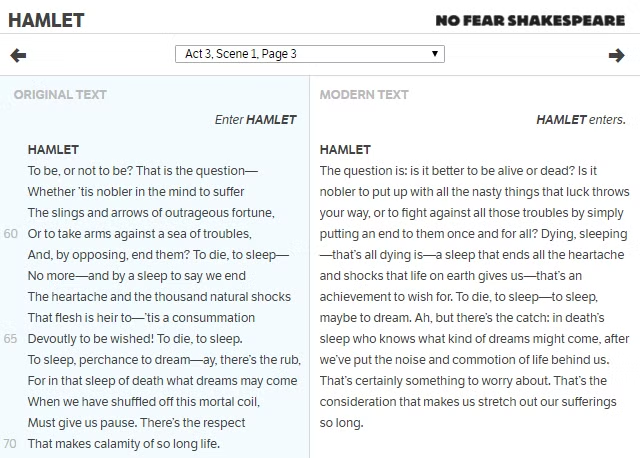 [Image Credit: www.makeuseof.com/]
There’s no rule that says you must struggle through the original text alone. Today, there are countless resources designed to make Shakespeare more approachable. Side-by-side editions—where the original text is paired with modern English—can be incredibly helpful.
These guides don’t ‘dumb down’ Shakespeare; they simply act as a bridge. Once you understand the meaning behind a line, the original phrasing becomes far more enjoyable.
Read It Aloud
Shakespeare’s language comes alive when spoken. His rhythm, wordplay, and emotional intensity are all designed for the human voice.
Try reading a scene aloud—even if it feels a little awkward at first. You’ll notice how much easier it is to grasp the meaning when you hear the words rather than just see them. Dialogue that seemed confusing on the page often becomes clear when spoken with the right tone and emphasis.
Focus on the Story First
It’s easy to get lost in unfamiliar vocabulary, but don’t let that distract you from the bigger picture. Every Shakespeare play tells a compelling story—of love, revenge, ambition, jealousy, or identity.
Before diving into the text, consider reading a brief summary of the plot. Knowing what happens allows you to focus on how it happens—the language, the character interactions, the emotional nuances—rather than constantly trying to figure out basic events.
Watch Performances
Since Shakespeare wrote for the stage. Your Shakespearean experience isn’t complete until you watch the words in action. A good adaptation—whether on stage or screen—adds visual and emotional context that makes the language easier to follow and transforms your understanding.
For instance, if you’re reading Romeo and Juliet, watching Romeo + Juliet starring Leonardo DiCaprio presents the original dialogue in a modern setting, making it easier to connect with the emotions while still hearing Shakespeare’s words.
If you prefer something closer to the original text, filmed stage performances offer a more traditional experience. Watching actors perform Macbeth or Hamlet on stage allows you to see how tone, pauses, and expressions bring meaning to even the most complex lines.
Films, theatre recordings, and even modern adaptations can serve as excellent companions to the text. Seeing how actors interpret the lines can reveal meanings you might have missed on your own.
Embrace the Humour and Humanity
One of the biggest misconceptions about Shakespeare is that he is overly serious or difficult. In reality, his works are filled with humour—puns, wordplay, and even outright silliness.
Characters like the bumbling artisans in A Midsummer Night’s Dream or the witty exchanges in his comedies show a playful side that often surprises first-time readers. At the same time, his tragedies explore deeply human emotions—love, fear, ambition—in ways that still resonate today.
Don’t Rush the Experience
Reading Shakespeare is not a race. Take your time with each scene. Reread passages that intrigue you. Pause to reflect on a powerful line or a dramatic moment.
The beauty of Shakespeare lies not just in understanding his words, but in experiencing them. The more time you spend with his works, the more familiar—and enjoyable—they become.
Let Curiosity Lead the Way
Finally, approach Shakespeare with curiosity rather than obligation. You’re not reading him because you have to—you’re reading him because his works have endured for centuries, captivating audiences across cultures and generations.
There’s something remarkable about realising that a line written over 400 years ago still feels relevant today. That connection, once felt, dissolves much of the intimidation.
Reading William Shakespeare for the first time can feel daunting, but it’s also an invitation into a world of vivid characters, poetic language, and timeless stories. You don’t need to be an expert to begin. All you need is a willingness to explore, to listen, and to enjoy the journey.
And somewhere along the way, you may find that the writer who once seemed so distant feels surprisingly close—almost as if he’s been speaking to you all along.
Your next read: 12 Classic Poems You Should Read This National Poetry Month